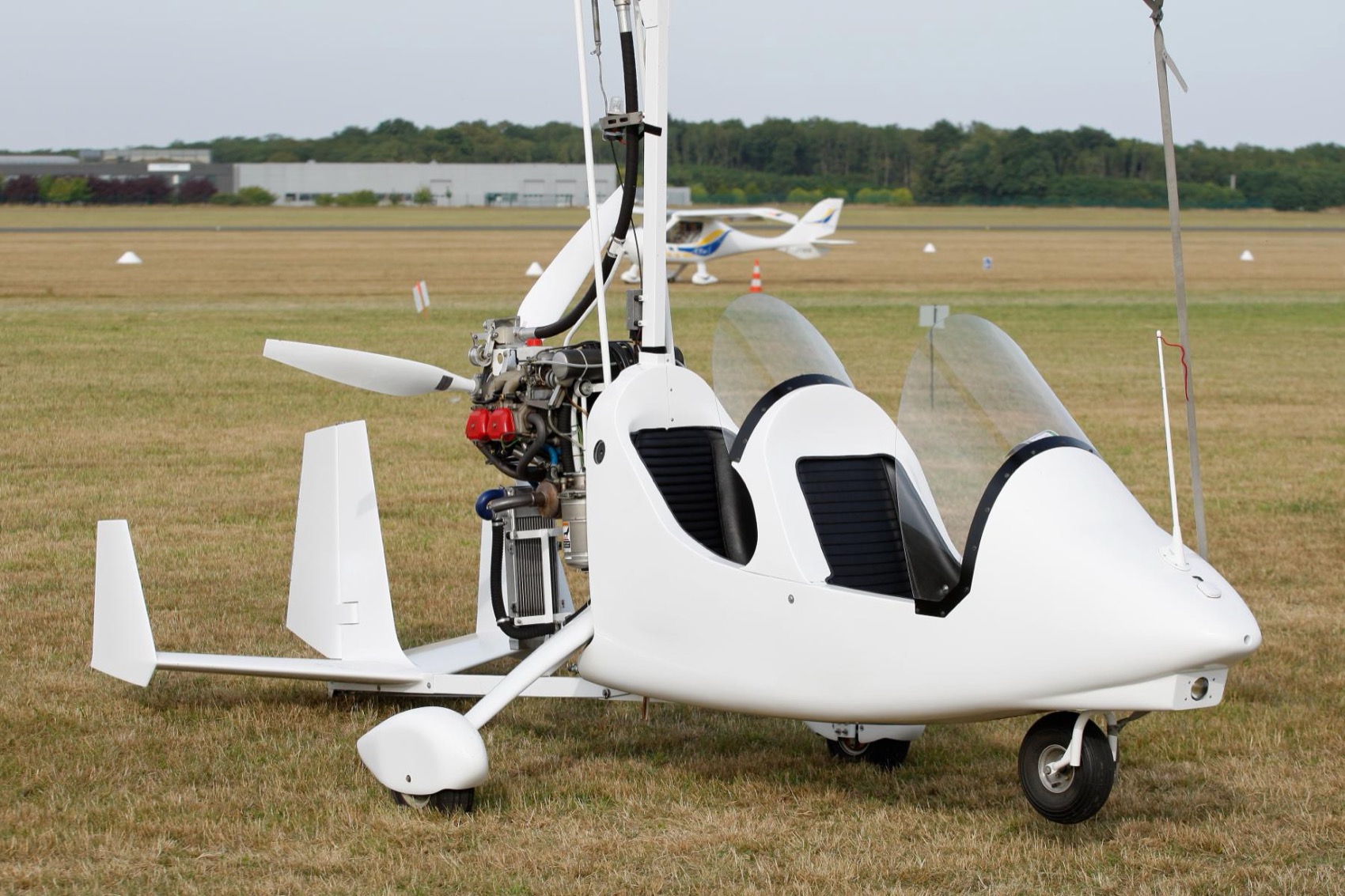
Most modern two-seat gyrocopters fly on 100 to 141 horsepower, and the single most common answer to this question is a number: 100, the output of the Rotax 912 ULS that powers a huge share of the factory fleet. Lighter single-seaters fly happily on far less. Here is why the power lives where it does, what the extra horsepower actually buys, and the mistake to avoid when an engine looks temptingly cheap.
The short version
- Typical two-seaters run 100 to 141 hp, almost always a Rotax four-stroke.
- Light single-seaters have flown on 50 to 65 hp for decades.
- The engine powers the propeller only; the rotor takes no engine power in flight.
- More horsepower buys climb and hot-day margin, not much cruise speed.
Where the power actually goes
Remember what the engine does on this aircraft: it turns the pusher propeller and nothing else. The rotor, the thing actually lifting the machine, is spun by airflow and takes no engine power at all, as laid out in how a gyrocopter works. So the horsepower question is really a thrust question: enough push to accelerate the aircraft to flying speed on a reasonable run, to climb away with two people aboard on a warm day, and to hold cruise against the rotor's drag. Drag is the gyroplane's tax collector, that big spinning disc costs power at any speed, which is why the aircraft rewards horsepower with climb far more than with speed.
The engines the fleet actually uses
| Engine | Power | Where it flies |
|---|---|---|
| Rotax 912 ULS | 100 hp | The default in factory two-seaters |
| Rotax 914 UL | 115 hp turbo | Hot-and-high machines, better climb |
| Rotax 915 iS | 141 hp turbo | Top-of-range models, strongest performance |
| Small two-strokes | 50 to 65 hp | Light single-seat and classic homebuilts |
What more horsepower buys, and what it does not
Step up from 100 to 141 horsepower and the transformation is in the climb: a loaded two-seater that trudged upward at a few hundred feet a minute on a hot afternoon goes up with authority, the takeoff roll shortens, and high-elevation fields stop being marginal. Cruise speed barely moves, because rotor drag rises steeply with speed and eats the surplus, a point covered in how fast a gyrocopter flies. So buy power for where you fly and what you carry: two big adults at a high-elevation field want the turbo; a solo pilot at sea level genuinely does not need it, and the price gap between those engines is real money.
The mistake to avoid is underpowering a heavy machine to save on the engine. A gyroplane that cannot climb out of its own takeoff run on a hot day with two aboard is not a bargain, it is a limitation you will meet at the worst possible moment. The flight manual's climb figures at gross weight, on a warm day, are the numbers to buy by, not the brochure's solo sea-level ones.
Why the little engines still matter
The 50 to 65 horsepower two-strokes that powered the Bensen era still fly, and they prove the aircraft's efficiency point: a light single-seater needs remarkably little power to fly well, because the unpowered rotor asks nothing of the engine directly. What the small engines give up is margin and, frankly, the reliability reputation of the modern four-strokes. The market has voted with the Rotax for good reason, and a used machine's engine model is one of the first things a buyer should check, both for performance and for the fuel and maintenance story covered in what fuel a gyrocopter uses.
Turbo ownership, the fine print
The turbocharged engines earn their keep in thin air, and they bring homework with them. A turbo runs hotter and harder, wants a cool-down idle after landing, and costs meaningfully more at overhaul time, differences an owner lives with on every flight, not just on the spec sheet. The 915 also asks for higher-octane fuel more insistently than its naturally aspirated siblings. None of this is a reason to avoid the turbo if your field sits at elevation or your flying is two-up in summer; it is a reason to buy it for those conditions and not for the brochure number. Plenty of the happiest owners in the fleet fly behind the plain 100-horsepower 912 and never once wish for more, because their flying never asks the question.
The buyer's version of the answer
If you are shopping, translate horsepower into three questions. Does this engine climb this airframe, at your real load, at your field's elevation, in summer? Is it an engine your local mechanic knows, which in practice means a Rotax? And is the extra cost of the turbo buying capability you will use, or bragging rights you will not? Answer those from the flight manual and a demo flight at real weight, and the horsepower number takes care of itself. The buyer's guide walks the rest of the decision.
Compare engines across the fleet
Every manufacturer page lists which engines each model takes and what they change. Shop by the numbers that matter.
Report inaccurate information. This page mixes public data with our own notes. Tell us what looks off and we will check it.