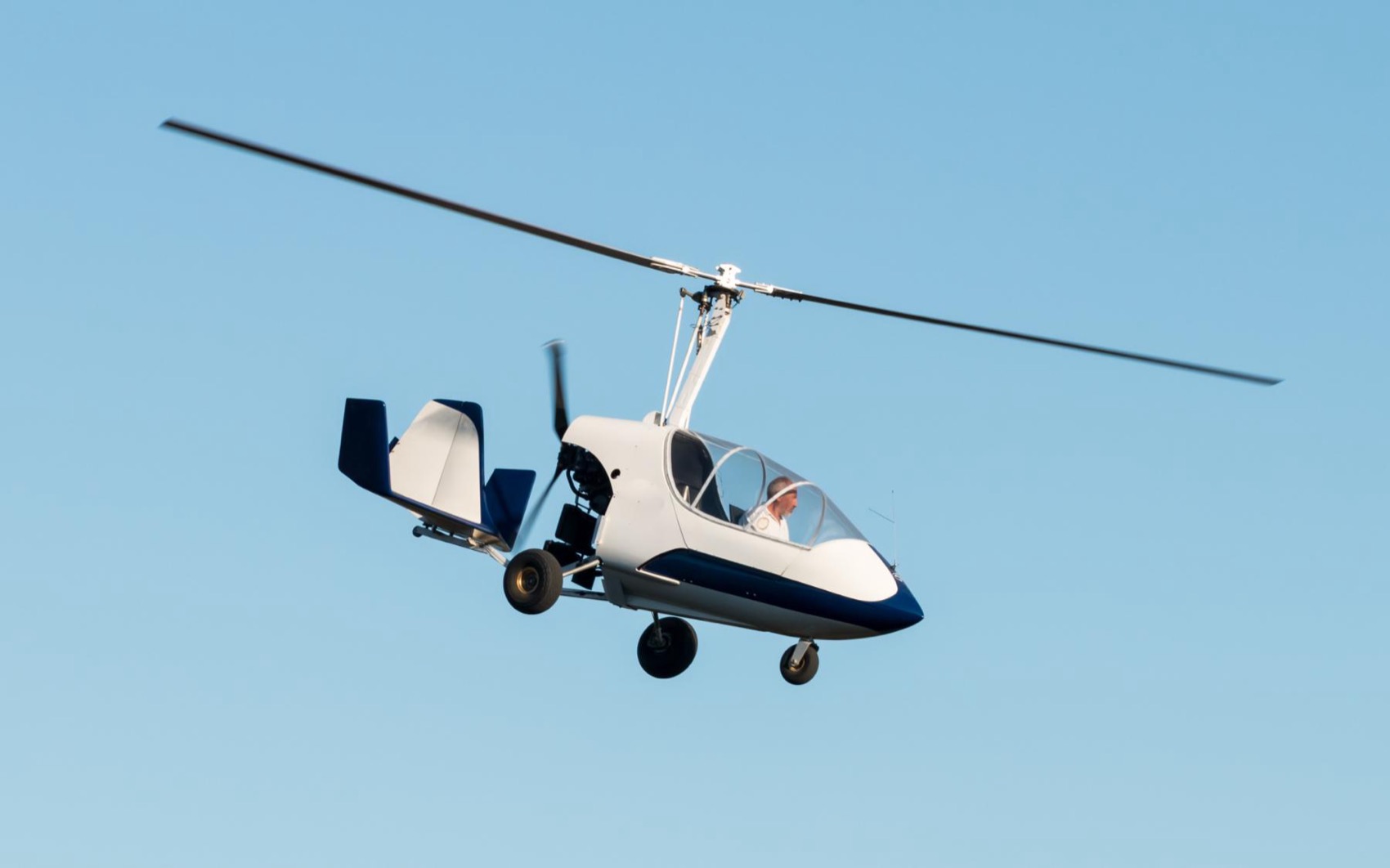
A modern two-seat gyrocopter cruises somewhere around 60 to 100 mph and covers roughly 200 to 350 miles before it needs fuel. Those two ranges answer most of the question, but the interesting part is why the numbers land where they do, and where the machine will genuinely surprise you.
Figures below are typical for current factory two-seaters running the common Rotax engines. Any specific aircraft has its own numbers in its flight manual, and that is the document that governs, not this page.
The performance in brief
- Cruise: about 60 to 100 mph for most machines, with faster models nudging higher.
- Range: roughly 200 to 350 miles on a tank, at 3 to 4 hours of endurance.
- Fuel burn: around 5 to 6 gallons an hour of automotive gasoline.
- Slow-flight is the party trick: it will fly at a crawl no airplane could match, though it cannot hover.
Speed, and why it is not higher
A gyrocopter trades top speed for its other virtues, and the reason is the rotor. That big spinning disc makes the aircraft calm and stall-proof, but it also drags through the air, and drag climbs steeply with speed. Push a typical machine much past 100 mph and you are fighting physics for every extra knot. Some models with more power and cleaner bodywork will show a higher top figure, but cruise, the speed you actually travel at, settles into that 60 to 100 mph band for good aerodynamic reasons, not a lack of ambition.
| Measure | Typical range | Notes |
|---|---|---|
| Cruise speed | 60 to 100 mph | Where you spend the flight |
| Top speed | Up to about 110 to 120 mph | Model dependent, drag limited |
| Range | 200 to 350 miles | Set by tank size and cruise |
| Endurance | 3 to 4 hours | Your bladder often runs out first |
| Fuel burn | 5 to 6 US gal/hour | Automotive gasoline, not jet fuel |
How far, and what shortens it
Range is just endurance multiplied by speed, so the tank and the cruise setting decide it. Three to four hours in the air at 70-odd miles an hour lands you in that 200 to 350 mile band. Two things quietly shrink it: a strong headwind, which a slow aircraft feels far more than a fast one, and the reserve you must keep in the tank. Plan a gyrocopter cross-country on still-air book numbers and a headwind will make a liar of you.

How high can it go
Higher than you will ever ask it to. Most gyrocopters are flown low, a few hundred to a few thousand feet, because that is the whole appeal, the ground close enough to enjoy. The machines are capable of far greater heights, and enthusiasts have taken them to altitudes that need oxygen and warm clothing, but that is a stunt, not a use case. Thin air also costs you climb and cruise, so a gyrocopter high up is a slower, working version of the same aircraft. Treat low level as the design point, not a limitation.
Two up, and carrying weight
Every figure so far assumes a sensible load. Put a second person and full fuel in a two-seater and the performance softens: a slower climb, a longer ground roll, and a shorter range as the weight eats into what the rotor and engine can spare. On a hot day at a high field the effect stacks up further. None of this is unique to gyrocopters, but they are light aircraft with modest power, and the useful load is real, not generous. Weigh what you actually plan to carry against the aircraft's published limits before you count on any number.
The number that actually impresses
Top speed is not where a gyrocopter shines. Slow speed is. These machines will fly steadily at speeds that would drop an airplane out of the sky, which is why they are so at home in gusty wind and short fields. They will not hover, because the rotor still needs air passing through it, but the gap between their minimum flying speed and zero is small, and that is the trait that makes them feel safe down low. The mechanism behind it is in how a gyrocopter works.
Planning numbers to carry in your head
- Figure roughly 70 to 90 mph for real cross-country planning, not the top-speed brochure number.
- Knock a good chunk off your range for a headwind and a sensible fuel reserve.
- Two up with bags on a warm day, expect less of everything: climb, cruise and range.
Buy a gyrocopter to go far and fast and you will be disappointed. Buy one to go low and slow and see everything, and nothing else at the price comes close.
Compare the real figures, model by model
Cruise, fuel and range vary by aircraft. Our manufacturer pages record what each company publishes, reproduced, not rounded.
Report inaccurate information. This page mixes public data with our own notes. Tell us what looks off and we will check it.