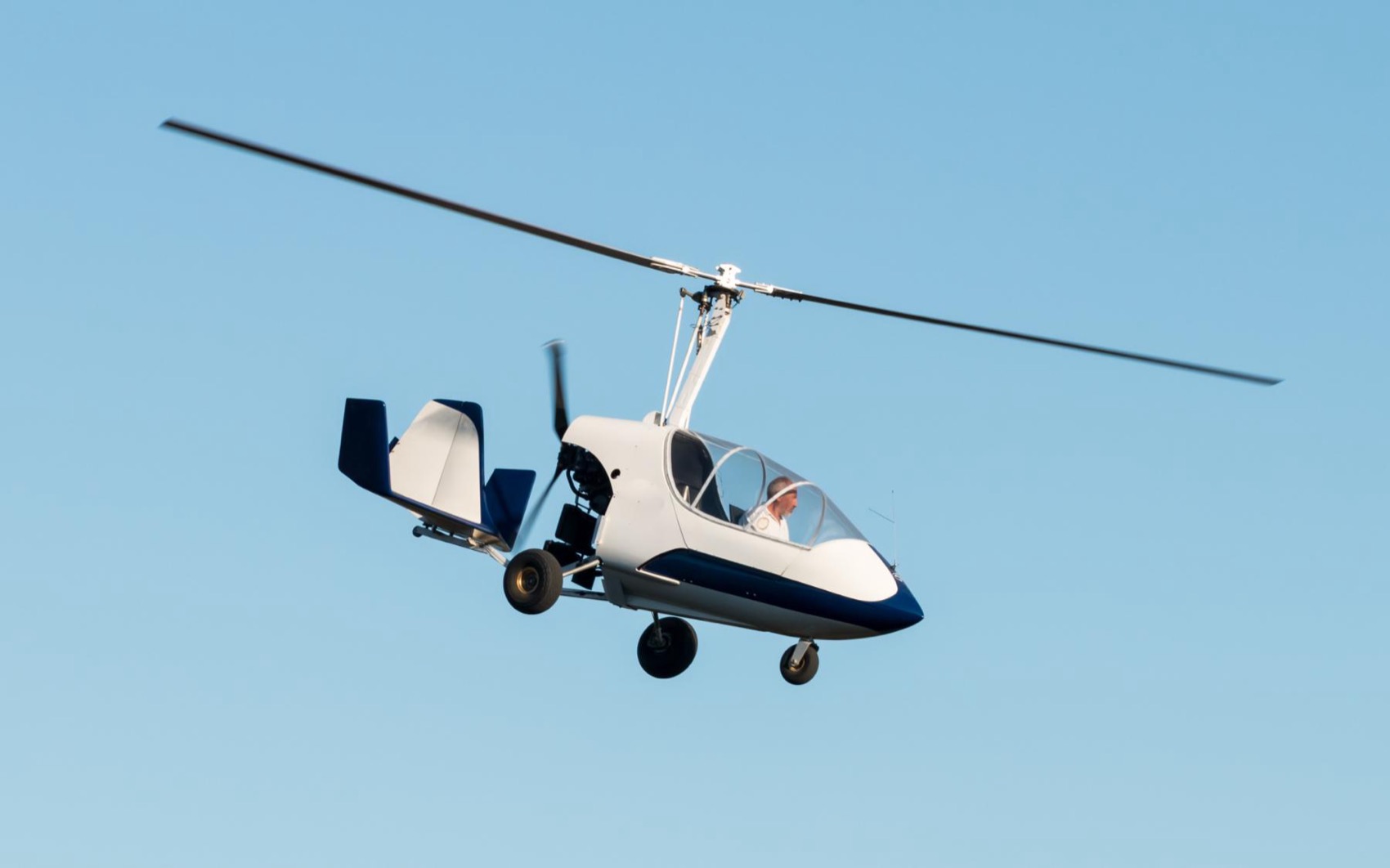
Ask five gyroplane pilots whether adding the rating means a checkride and you will get answers that flatly contradict each other. Both sides are right, because two different paths lead to gyroplane privileges, they require different things, and they end in different privileges. Knowing which one applies to you is the first question, before hours or cost.
The short version
- Adding gyroplane privileges under sport pilot rules uses two instructors and logbook endorsements, no FAA practical test.
- Adding a rotorcraft category and gyroplane class rating to a private or higher certificate requires a real practical test with a designated pilot examiner.
- The two paths grant different privileges, not just different amounts of paperwork.
- Which one is actually available to you depends on the certificate you already hold.
Path one: adding gyroplane under sport pilot rules
A pilot who already holds sport pilot privileges, or a higher certificate exercising them, can add gyroplane as an additional class without sitting a new FAA practical test. Instead, 14 CFR 61.309 and 61.311 set the aeronautical knowledge and flight proficiency areas required, and the process runs through two separate instructors by design. The first CFI trains you on those areas and endorses your logbook. A second, different CFI then conducts a proficiency check on the same areas and, if you pass, signs FAA Form 8710-11 and endorses you for the privilege.
The second instructor is not a formality. There is no DPE checkride at this privilege level, so the requirement for an independent second opinion is the built-in substitute for one. A single instructor training and then signing off their own student, with nobody else checking the work, is exactly the gap the rule closes.
Path two: adding a rotorcraft category and gyroplane class rating
A private, commercial, or higher pilot certificate can instead add a full rotorcraft category and gyroplane class rating under 14 CFR 61.63, which points back to the aeronautical experience in 61.109. As of this writing that means at least 40 hours of flight time, including at least 20 hours of dual instruction, with 3 hours of that dual instruction completed in a gyroplane in the two calendar months right before the test. These figures are set by regulation and can change, so confirm the current numbers with your instructor or the FAA before you plan around them.
Unlike path one, this route ends with an actual practical test administered by a designated pilot examiner, the same kind of checkride behind any other category or class addition. It costs more in structure and in DPE fees, and it grants a rating that sits on the certificate itself, not a set of sport pilot privileges layered on top of what you already hold.
| Sport pilot add-on | Rotorcraft-gyroplane class rating | |
|---|---|---|
| Governing rule | 14 CFR 61.309 and 61.311 | 14 CFR 61.63, referencing 61.109 |
| Who signs you off | Two different CFIs, by endorsement | One CFI trains you, a DPE tests you |
| FAA practical test | None | Required |
| Paperwork | Logbook endorsements, FAA Form 8710-11 | Practical test application and checkride |
| What you end up with | Sport pilot privileges in a gyroplane | A rotorcraft category, gyroplane class rating on the certificate |
These are not two difficulty levels of the same thing. They are two different privileges. Sport pilot privileges carry real limits, daytime VFR and a single passenger among them, that a full rotorcraft category and class rating does not. Choose based on what you actually want to fly and when, not on which path sounds shorter.
Which one is actually open to you
Start from the certificate you already hold. Already flying on sport pilot privileges, or willing to accept their limits, and path one gets you into a gyroplane with two instructors' signatures instead of a DPE's. Already hold, or want, a private or higher certificate with no restriction on when or with whom you fly, and path two is the one that actually gets you there, hours and a checkride included.
Either way, the FAA's MOSAIC rule is changing what aircraft qualify and how training around them is offered, covered in the MOSAIC rule and gyroplane flight training. And whichever path you take, an aircraft with a high thrust line demands a real, briefed understanding of power push over before you fly it alone, something neither path substitutes for.
Find the instructor for your path
A CFI who teaches gyroplanes will know which path applies to your certificate before you have even asked the question twice.
Report inaccurate information. This page mixes public data with our own notes. Tell us what looks off and we will check it.