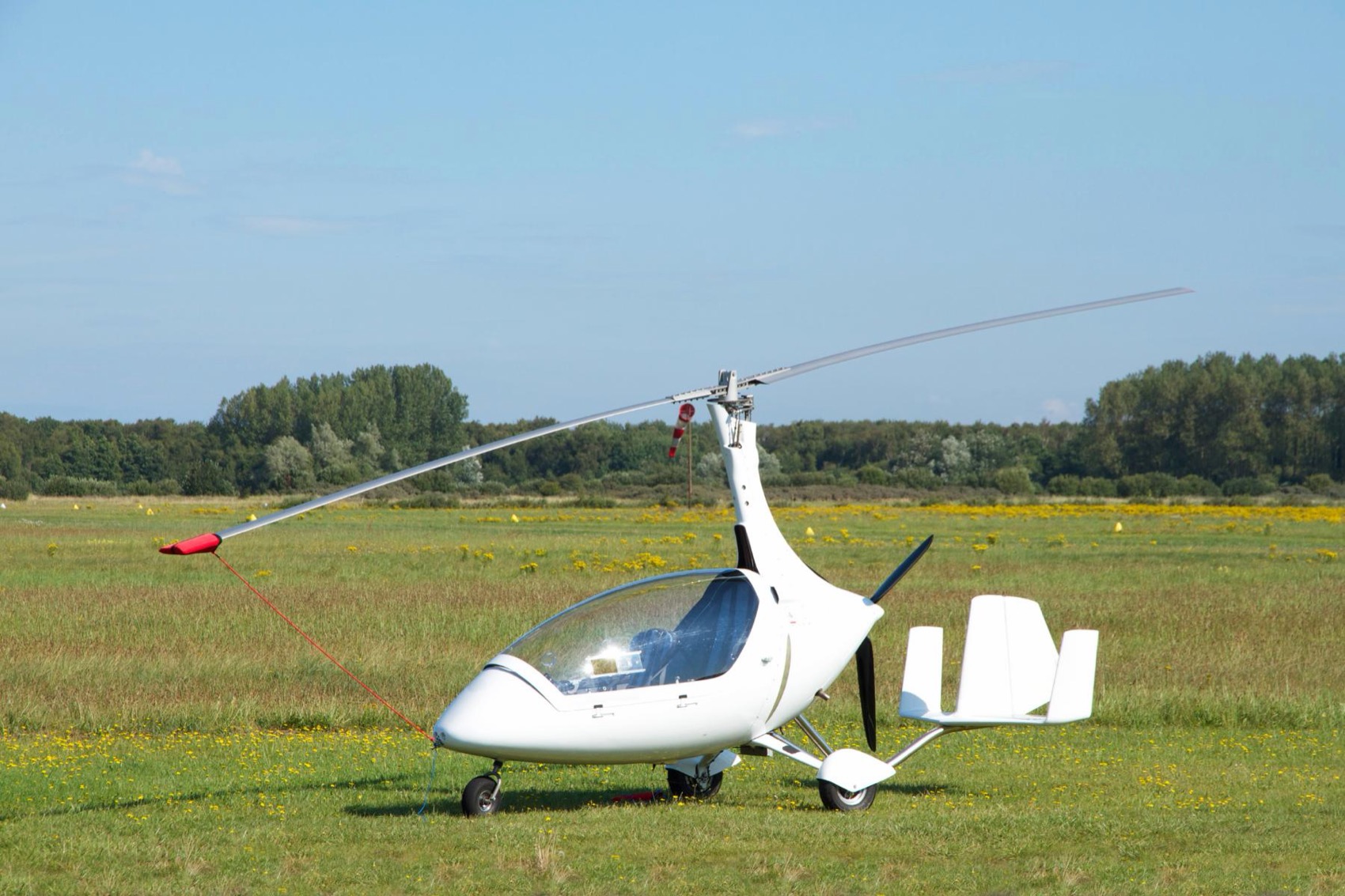
Gyrocopters carry a dangerous reputation, and it is half earned and half out of date. The machines that built the bad name are not the machines you would buy today, and the difference is not marketing, it is geometry. Here is the honest version, including the parts a seller would rather skip.
I have read a lot of accident reports putting this site together. The pattern in them is the reason I say what follows.
The honest summary
- The old reputation comes from early home-built designs with a known, fixable flaw.
- Modern factory machines corrected that flaw and have a solid record when flown by trained pilots.
- Most accidents trace to a decision, not a mechanical failure, and cluster in a pilot's first hours on type.
- A gyrocopter cannot stall, and an engine failure is a glide. Those are real safety advantages.
Where the bad reputation came from
In the 1960s and 70s the gyrocopter was mostly a home-built machine, and a common layout put the propeller thrust line high above the aircraft's centre of gravity, with little or no horizontal stabiliser. That combination has a nasty trait: unload the rotor and the propeller can pitch the nose down in a way the pilot cannot reverse. It was behind a grim run of accidents, and it is where the word dangerous attached itself to the whole category. The physics was real. So were the funerals.
What modern designs actually changed
The fix was understood and built in. Bring the thrust line down close to the centre of gravity, add a proper horizontal stabiliser, and the nose-down trap largely goes away. Nearly every reputable factory machine sold now is built that way. This is why lumping a current Cavalon or Magni in with a 1970s home-built is like judging modern cars by a model that has not been made in fifty years.
| Feature | Older high-risk layout | Modern factory layout |
|---|---|---|
| Thrust line | High above the centre of gravity | Close to the centre of gravity |
| Horizontal stabiliser | Small or absent | Sized to resist the pitch |
| Nose-down risk | High when the rotor unloads | Much reduced |
What the numbers say, and what they do not
You will see modern gyroplanes quoted at roughly 0.5 to 1.5 accidents per 100,000 flight hours, better than the 2 to 3 often cited for helicopters. Treat those figures as a direction, not a decimal. The fleet is small, reporting is uneven, and I would not stake a decision on the third significant figure. What the numbers do support is the broad point: flown by a trained pilot in a well-built, well-maintained machine, a modern gyrocopter is not the deathtrap of legend.
The uncomfortable truth in the reports is that the machine is rarely the culprit. Most accidents come from a decision made on the ground or in the first seconds of a manoeuvre, and they cluster in a pilot's early hours on a new type, before the reflexes catch up. That is a training problem, and training problems have training solutions.
The safety advantages that are genuinely real
Two of them are worth spelling out because they are not sales talk. A gyrocopter cannot stall, so the low-speed loss of control that kills fixed-wing pilots is off the table. And because the rotor is never driven by the engine, an engine failure is a controlled glide, not a scramble to enter autorotation. If you want the mechanism behind both, it is in how a gyrocopter works.
Where the danger actually still lives
Being honest cuts both ways. A gyrocopter has specific failure modes that punish airplane reflexes, chiefly a pilot-induced oscillation and the power push-over the old machines were famous for. They are avoidable, but only if you are taught them on type by someone who knows the aircraft. I will not print the recovery techniques here, because two of these develop in under a second and a half-remembered article is worse than useless in that moment. The full, honest breakdown is in 4 reasons gyrocopters crash, and the fix in every case is hours on type with a good instructor.
How to tell a safer machine from a riskier one
If safety is your lens for buying, a few things separate a sound aircraft from a gamble, and none of them needs a test pilot to check.
What to look for
- A thrust line close to the centre of gravity and a proper horizontal stabiliser, the two features that tamed the old reputation.
- Rotor blades and drive belts with life left in them, and their ages written in the logbook, not guessed at.
- A seller who knows the aircraft's history and answers the thrust-line question without a shrug.
- A type you can actually get instruction on nearby, because the machine is only ever as safe as the training behind the pilot.
Safety is bought in lessons, not slogans
The single best thing you can do for your odds is get type-specific training early. Find an instructor or a school that teaches the exact model you will fly.
Report inaccurate information. This page mixes public data with our own notes. Tell us what looks off and we will check it.