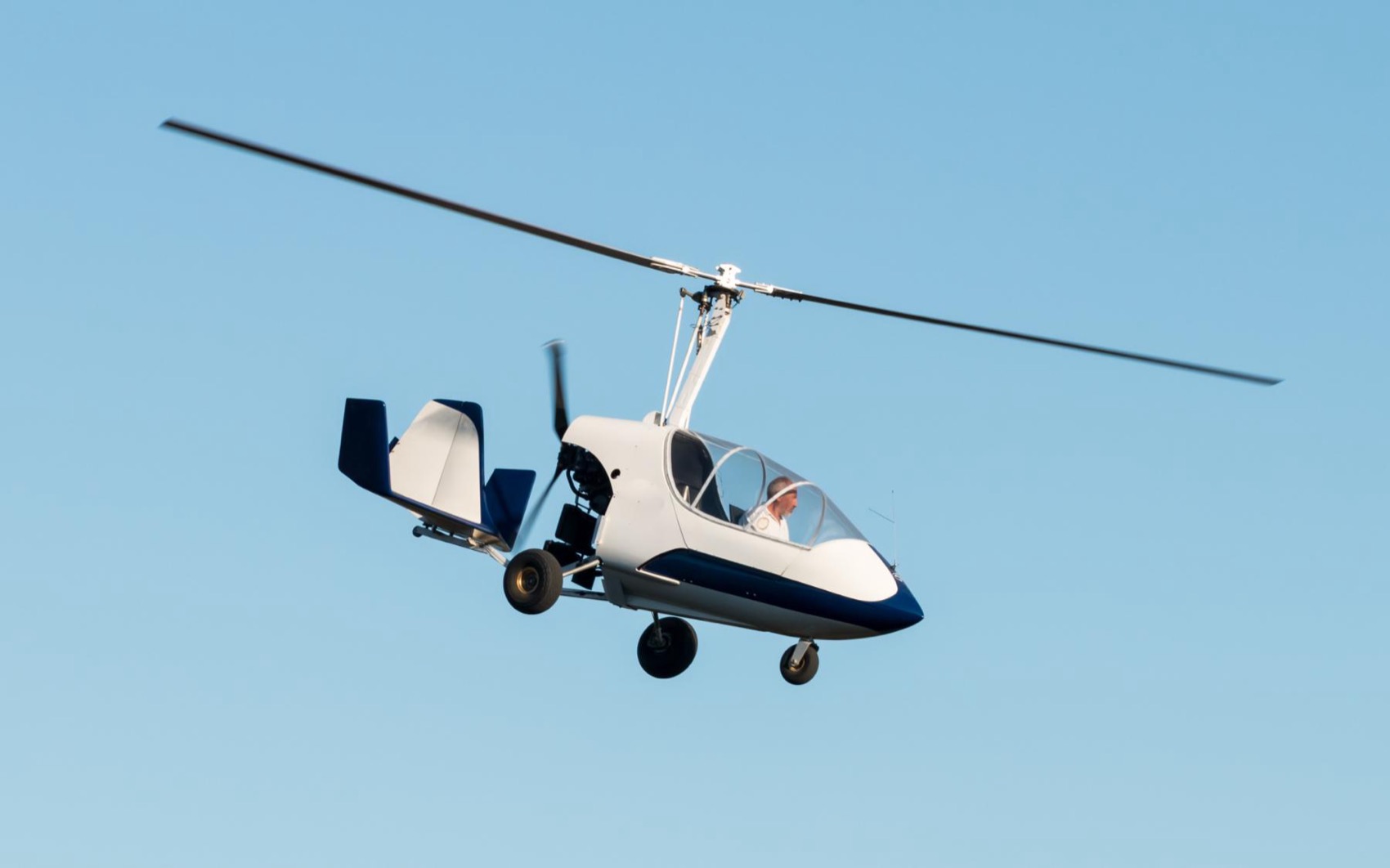
Most people shopping for an affordable way into the sky end up weighing a gyrocopter against a small airplane, because the entry prices overlap and both need a licence and a place to fly. They are honest rivals in a way the helicopter never is, and the right choice depends on a question most buyers skip: do you want to travel through the sky, or be in it?
The short version
- An airplane wins on speed, range and carrying: it is transportation.
- A gyrocopter wins on wind tolerance, short fields, low-speed manners and pure fun per dollar.
- A gyrocopter cannot stall or spin; an airplane can, and that is where its low-speed danger lives.
- Running costs land closer than people expect; the missions do not.
What the airplane does better
Distance. A modest fixed-wing cruiser covers ground at 120 knots and more, carries two people with real luggage, and turns a 300-mile trip into an afternoon. Its wing is efficient, so it glides far when the engine stops and sips less fuel per mile travelled. If your flying is going somewhere, visiting family two states over, commuting to a work site, the airplane is a tool built for exactly that, and a gyrocopter cruising at 60 to 100 mph with a couple of soft bags is not trying to compete.
What the gyrocopter does better
Everything low and slow. The gyroplane's rotor cannot stall, so the aircraft will fly steadily at speeds that would drop an airplane out of the sky, and it rides gusty air that keeps light fixed-wings in the hangar. It uses a couple hundred feet to take off and almost nothing to land into wind, so small strips and farm fields are its natural habitat. Visibility from an open cockpit is total in a way no airplane cabin approaches. If the flight itself is the point, an hour over the countryside on a blowy evening, the gyrocopter is simply a better instrument for the job.
| Gyrocopter | Light airplane | |
|---|---|---|
| Cruise speed | 60 to 100 mph | Commonly 115 to 160 mph |
| Stall or spin | Cannot | Can; trains against it forever |
| Gusty wind | At home in it | Uncomfortable to unsafe |
| Field length | A couple hundred feet | Usually far more |
| Range with load | 200 to 350 miles | 400 to 700 and up |
| Built for | The flying itself | Getting somewhere |
The safety comparison, honestly
Each aircraft carries a different risk shape. The airplane's classic killer is the low-and-slow corner: the stall or spin on the turn to final that has ended more fixed-wing pilots than any mechanical failure. The gyrocopter deletes that entire category, which is a genuine, structural safety win. In exchange it brings its own failure modes, chiefly rotor mishandling near the ground, which demand type-specific training and punish airplane reflexes. Engine failure favours the gyro in one way, no runway needed, and the airplane in another, a much longer glide to choose a field with. Neither is simply safer. The pilot's training on the machine they actually fly decides it, as it always does.
Money, and where it actually differs
Purchase prices overlap: a clean used two-seat gyroplane and an ageing but sound light airplane both live in the tens of thousands, and a new example of either runs six figures with options. The gyro burns automotive gas at five to six gallons an hour and has no wings to fold or hangar-width problem; the airplane often needs avgas and more shelter, but its per-mile cost wins the moment a trip has a destination. Insurance currently costs the gyro pilot more for the reasons covered in gyrocopter insurance. The honest summary: neither is the budget option across the board, they spend the same money on different pleasures.
The licence path, compared
Both aircraft are reachable through the sport pilot certificate, and the effort is comparable: an FAA minimum of 20 hours either way, with most students needing more. The airplane wins on convenience, since fixed-wing schools are everywhere and gyroplane instructors take some finding. The gyro wins on transfer the other direction: an existing airplane pilot can add the gyroplane rating in a handful of hours, which makes owning one as a second aircraft cheaper than most people assume. Either way the paperwork is the smaller obstacle; seat time is the real currency, as laid out in what training costs.
Buy the airplane to shrink the map. Buy the gyrocopter to enjoy the piece of it you are already over.
How to actually decide
Fly an hour in each, honestly weigh what you did with your last ten weekends, and notice which flight you are still thinking about a week later. Buyers who chose on spec sheets end up with airplanes they fly twice a year to nowhere in particular, which is the one mission the gyrocopter does better. If the answer turns out to be the gyro, the path starts with the licence and the buyer's guide.
Put an hour in the seat before you decide
Schools that teach gyroplanes will fly you before you commit to anything. That hour answers this whole page.
Report inaccurate information. This page mixes public data with our own notes. Tell us what looks off and we will check it.