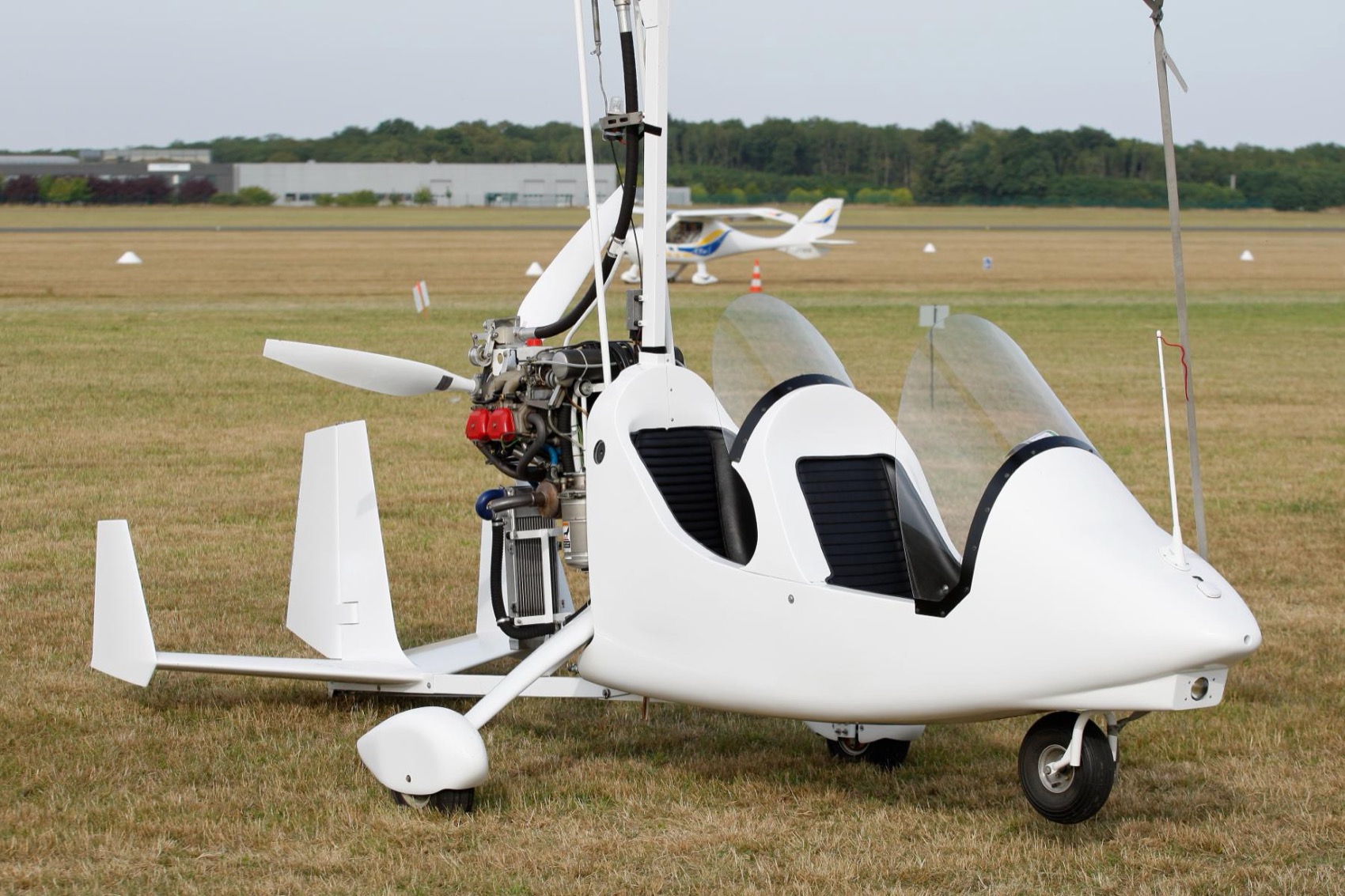
The short answer for the United States is yes, you need a licence, and the people who tell you otherwise are usually thinking of something that does not apply to the aircraft you actually want to fly. What you need is a pilot certificate with a rotorcraft-gyroplane rating. The good news is that the entry-level version of it is one of the more accessible certificates in aviation.
A word on numbers before we start. Certificate rules and hour minimums are set by the FAA and they change, so where a figure appears below, treat it as current-at-writing and confirm it against the FAA before you plan around it.
The short version
- You need at least a Sport Pilot certificate with a rotorcraft-gyroplane rating.
- Sport Pilot can use a valid US driver's licence in place of an FAA medical, if you meet the conditions.
- The "no licence needed" claim only fits a legal single-seat ultralight, which almost no real gyrocopter is.
- Already a pilot? Adding gyroplane is far quicker than starting from zero.
The "you can fly one without a licence" myth
This comes up constantly, so let us kill it cleanly. There is a genuine category, the Part 103 ultralight, that needs no licence, no medical and no registration. The catch is that a legal Part 103 vehicle has to be single-seat, under a strict empty weight, and slow, and the two-seat gyrocopters people actually buy do not come close to qualifying. If you are shopping the machines in our marketplace, assume you need a certificate, because you do.
Sport Pilot or Private Pilot
Two certificates let you fly a gyroplane. Most people start with Sport Pilot because it is faster and cheaper to reach, then some add privileges later.
| Sport Pilot | Private Pilot | |
|---|---|---|
| Medical | Valid US driver's licence may suffice | FAA medical certificate |
| Typical time to earn | Shorter | Longer |
| Where you can fly | Day, good weather, with limits | Broader privileges |
| Rating you add | Rotorcraft-gyroplane | Rotorcraft-gyroplane |
The path to flying legally
-
Take a demo flight and sort your medical footing
One flight tells you whether you want this. In parallel, work out whether you will fly under the driver's-licence provision or need an FAA medical, as that decision shapes everything after it.
-
Find a gyroplane instructor
This is category and class specific. You want an instructor rated in gyroplanes on the type you intend to fly, not a fixed-wing instructor improvising.
-
Train dual, then solo
You will fly with the instructor, then on your own under supervision. The current FAA sport-pilot minimum sits around 20 hours, but it is a floor almost nobody lands on, and the honest question to ask a school is what their students actually average.
-
Pass the knowledge test and the practical
A written knowledge test and a practical check with an examiner finish it. Study the ground material alongside your flying so you are not paying rotor time for a book you could read at home.
If you already hold a certificate in airplanes or helicopters, adding a gyroplane rating is a transition, not a fresh start, and it usually takes a fraction of the time. The catch is that your existing reflexes are partly wrong for this aircraft, which is a training subject in itself. The cheaper-rotorcraft angle is covered in our companion piece, how to get a helicopter license.
How long it takes, roughly
Nobody can hand you an exact hour count, because it depends on how often you fly and how quickly the handling clicks. What holds true is that flying twice a week finishes for less total money than a lesson every couple of weeks, even though the hourly rate is identical, because long gaps mean re-learning, and re-learning is billed at the same rate as learning. If you already fly airplanes or helicopters, the gyroplane rating is an add-on measured in a handful of hours , not a season, though your existing instincts need retraining for an aircraft that behaves differently from anything you have flown.
Anyone who tells you a two-seat gyrocopter needs no licence is either talking about a single-seat ultralight or about to get you into trouble.
What MOSAIC just changed
This is the part most licence explainers have not caught up on. The FAA's MOSAIC rule, finalised in 2025, reworked the light-sport and sport-pilot system, with the sport-pilot pieces taking effect in October 2025 and the aircraft rules following in mid-2026. Among other things it broadens what a sport pilot can do and clears a path for factory-built light-sport gyroplanes, which did not exist before. If you are reading older advice that says gyros can only be experimental, know that the ground has shifted, and check the current FAA position, not a page written before the rule.
Start with an instructor, not a forum
The fastest way to a real answer for your situation is an hour with someone who teaches this for a living. Our directories are free to search.
Report inaccurate information. This page mixes public data with our own notes. Tell us what looks off and we will check it.