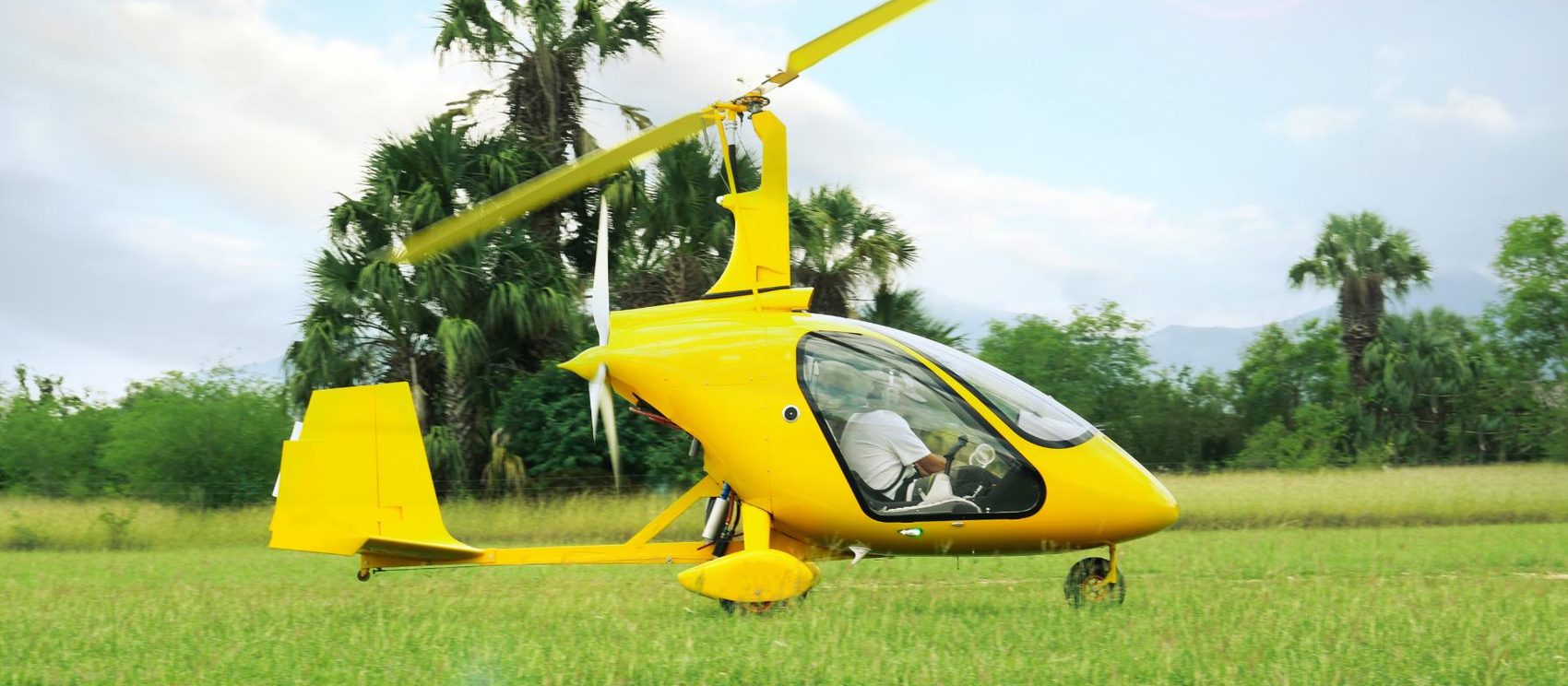
Gyrocopters are easy to fly and hard to fly badly, and the difference between those two sentences is where every honest answer to this question lives. In cruise, the aircraft is stable, forgiving and less workload than a light airplane. Near the ground, it demands habits that are different from anything else you may have flown, and it does not forgive winging it. Here is the real difficulty picture, phase by phase.
The honest answer
- In the air, a gyrocopter is one of the easiest aircraft there is: stable, stall-proof, calm in wind.
- The genuinely demanding parts are the takeoff roll and rotor management on the ground.
- Experienced airplane pilots often find it harder than beginners, because their reflexes fight it.
- With type-specific training the skills come quickly; without it the aircraft is unforgiving.
The easy part is most of the flight
Once established in the air, the gyroplane asks very little. There is no stall speed to guard, so slow flight is relaxed instead of tense. There is no mixture, no flaps, no gear, and on most machines no constant-speed propeller: throttle and stick do nearly everything. Turbulence that has airplane students white- knuckled reads as background texture through a rotor. Students routinely solo the cruise-and-landing portion sooner than their airplane counterparts, and the landing itself, covered in how do you land a gyrocopter, clicks early because nothing lurks beneath the slow-speed part of it.
The hard parts are short and specific
The skill lives in two places. First, the takeoff roll: the rotor must be pre-spun and then coaxed up to flying rpm with airflow, stick held correctly, before the aircraft can accelerate properly. Rush it and the blades can flap and strike the airframe at walking pace. It is pure procedure, learned in a few sessions, and it never becomes optional. Second, rotor discipline in flight: the cardinal rule is to keep the rotor loaded and never shove the stick forward abruptly, because an unloaded rotor is the path to the aircraft's one truly dangerous corner. Both habits are trained until automatic, and both are why instruction on type is non-negotiable, not a formality.
The counterintuitive finding, reported by instructor after instructor: the hardest students are often experienced airplane pilots, not raw beginners. A beginner has no reflexes to unlearn. An airplane pilot arrives with a lifetime habit of lowering the nose to gain speed, which is precisely the input a gyroplane punishes. The aircraft is not hard. Unlearning is hard.
How long it actually takes
The FAA minimum for a sport pilot certificate is 20 hours, and most students land somewhere between 15 and 25 hours of dual before the checkride, with consistency of lessons mattering more than talent. Transitioning airplane or helicopter pilots typically convert in a handful of focused hours, plus however long the unlearning takes. Compare that with the helicopter, whose hover alone consumes many students' first ten hours, and the gyroplane sits clearly on the easier side of rotorcraft, at a fraction of the hourly cost, as broken down in what training costs.
Easy to fly is not the same as safe to wing
Here is the sentence that reconciles the marketing with the accident reports. The gyroplane's easy handling tempts people into believing the whole aircraft is casual, and its short list of hard parts is exactly where the accidents concentrate: rushed takeoff rolls, unloaded rotors, wind mishandled on the ground. Flown by the book the machine is gentle. Improvised, it bites harder than an airplane precisely because its failure modes are unfamiliar. That is not a contradiction, it is a description of every specialised machine ever built, and the honest safety picture is in are gyrocopters safe.
Beginners find gyrocopters surprisingly easy. Airplane pilots find them surprisingly humbling. Both are telling you the same thing: this aircraft is its own discipline.
The wind question, answered sideways
One more data point belongs in the difficulty file: the conditions that make other light aircraft hard make the gyroplane easy. A gusty, thermally afternoon that has student airplane pilots cancelling is routine gyro weather, because the rotor rides turbulence that would toss a light wing and there is no stall waiting under a gust-induced speed loss. New gyro pilots regularly log confident hours on days their fixed-wing friends stayed on the ground, which does more for skill-building than any calm-evening circuit. The machine's difficulty curve is simply shaped differently: steepest in the first meters of the takeoff roll, flattest exactly where other aircraft get worrying.
What to do with this answer
Take a discovery flight, which settles in one hour what paragraphs cannot: most people step out grinning at how manageable it felt. Then, if it took, train properly on the type you will fly, and treat the two hard habits as the core of the syllabus they are. The aircraft meets you more than halfway. It just insists you walk your half.
Feel it for yourself in an hour
A discovery flight with a gyroplane instructor is the real answer to this question, and it costs about as much as a nice dinner.
Report inaccurate information. This page mixes public data with our own notes. Tell us what looks off and we will check it.