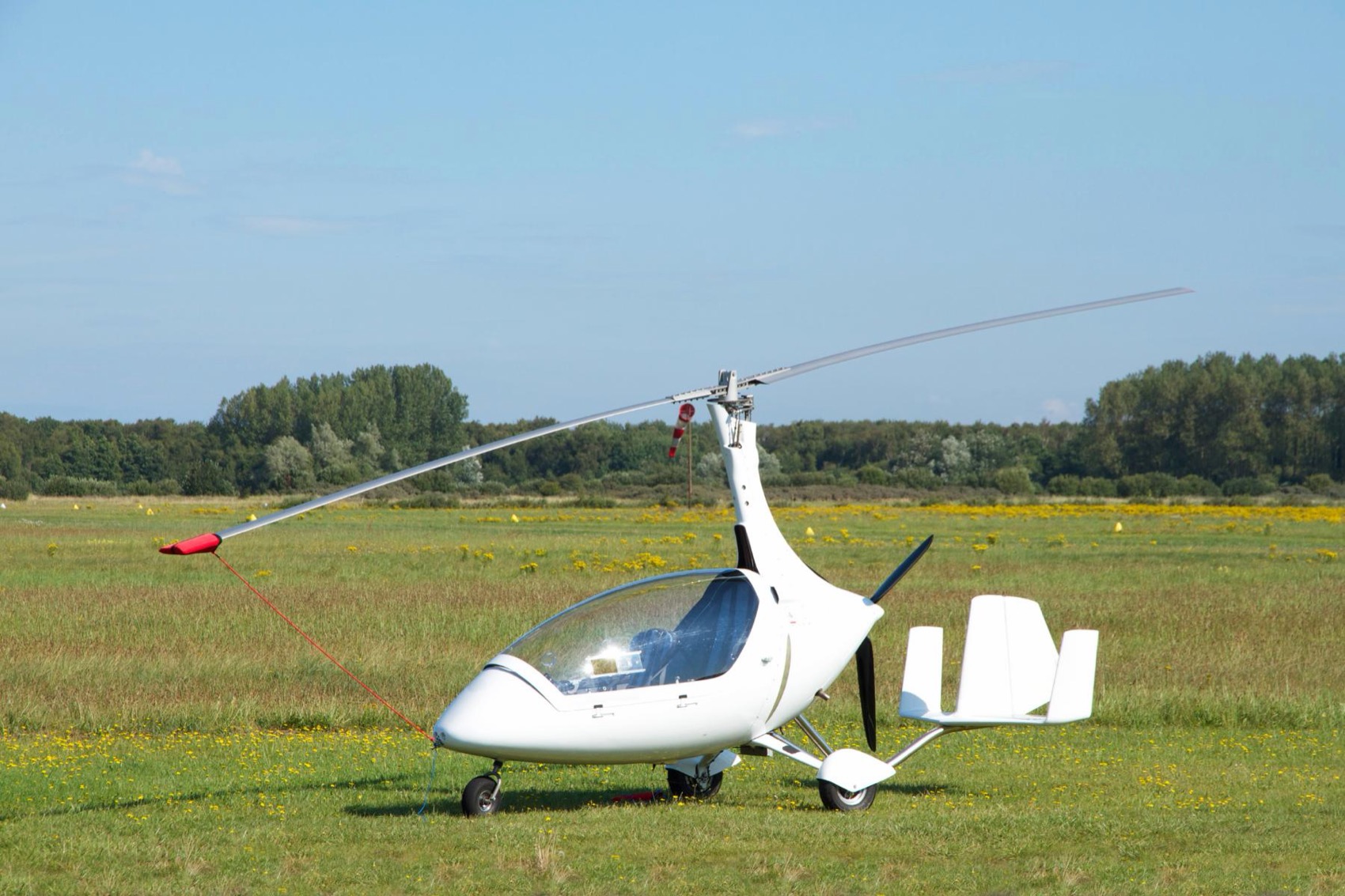
A gyrocopter landing is the part that makes first-time passengers gasp, because it looks like the aircraft simply steps out of the sky and stops. Steep approach, a flare a few feet up, and a touchdown that can use less runway than a car needs to park. Here is how that landing actually works, why it is so short, and where the skill in it really lives.
The usual disclaimer, meant sincerely: I am a pilot, not an instructor, and this page explains what happens, it does not teach you to do it. Landing technique is learned in the aircraft, on your type, with an instructor rated for it.
The landing in brief
- The approach is steeper and slower than an airplane's, under full control.
- A flare near the ground trades the last of the speed for a gentle touchdown.
- Into any decent wind the ground roll can be a few feet, sometimes none.
- The skill is energy judgement: the rotor stores the energy that cushions the arrival.
Why the approach looks so steep
A gyroplane glides at roughly four to one, four feet forward for each foot down, which is a far steeper path than a light airplane's. That sounds like a disadvantage until you watch what it buys: the aircraft can descend into a small field over obstacles an airplane could never clear on approach. Because the rotor cannot stall, the pilot can fly that steep, slow approach without the low-speed nervousness a fixed-wing pilot lives with. The machine comes down the slope it glides, calm and steerable the whole way.
The flare, where the magic actually is
Close to the ground the pilot eases the stick back and the nose comes up. Two things happen at once. The descent shallows as the rotor disc tilts aft and bites more air, and the aircraft's remaining speed bleeds away. The spinning rotor is a flywheel: the energy stored in it is what cushions those last feet. Timed well, the wheels touch at a walking pace or slower, and into a headwind the machine can arrive with essentially no forward speed at all. That is the near-vertical landing people film at fly-ins, and it is ordinary technique in this aircraft, not a stunt.
How short is short
On a calm day a competent pilot puts a two-seater down and stops within a few aircraft lengths. Into a stiff breeze the roll can shrink to steps, because the aircraft's touchdown speed minus the headwind approaches zero. Compare that with the same machine's takeoff, which needs a couple hundred feet to spin the rotor up to flying speed, and you get the gyroplane's signature asymmetry: it can land places it cannot leave. Pilots plan around that, and the full numbers live in how much runway a gyrocopter needs.
The energy story is also why an engine failure changes so little about the landing. The rotor is driven by airflow, not the engine, so a power-off approach is the same steep glide and the same flare, just without the option to go around. Practising exactly that arrival is a standard part of training, and it is covered honestly in what happens if the engine fails.
Where the skill lives
Everything above sounds forgiving, and mostly it is, but the flare is a judgement of energy and height that has to be built by repetition. Flare too high and the rotor spends its stored energy in the air, leaving the aircraft to arrive firmly from a few feet up. Flare too late and the nosewheel meets the ground first, which gyroplanes with their tall masts and small nosewheels do not appreciate. Neither mistake is exotic, both are trained out early, and the aircraft gives clear feedback the whole way. Students usually find landings click sooner in a gyroplane than in an airplane, precisely because there is no stall lurking under the slow-speed part.
The ground part people forget
The landing is not over at touchdown. The rotor is still spinning with real energy in it, and the machine has to be flown until the blades have slowed: stick position managed, brakes used gently, no sharp taxi turns while the disc is alive. The tall rotor mast that makes the aircraft what it is also gives the wind a lever on the ground, so pilots keep flying the disc all the way to the tie-down. It is the least glamorous part of the lesson and the part good instructors drill hardest.
Takeoffs are optional, landings are mandatory, goes the old aviation line. The gyrocopter's version is friendlier: the landing is the part the aircraft is genuinely best at.
Watch one land, then try it with an instructor
A demo flight ends with the landing described above, and feeling it from the seat beats reading about it. Find a school or instructor near you.
Report inaccurate information. This page mixes public data with our own notes. Tell us what looks off and we will check it.