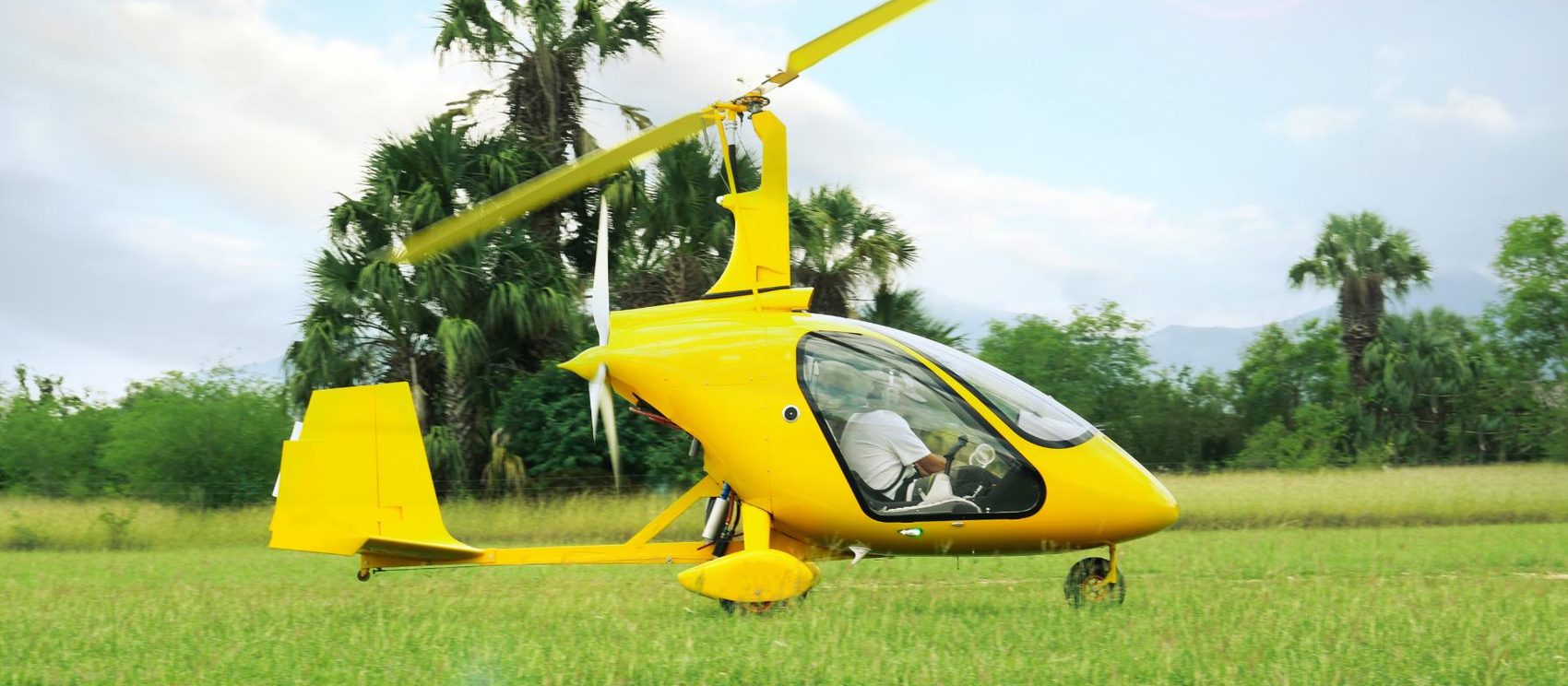
Learning to fly a gyrocopter is less about mastering something exotic and more about unlearning habits you may not know you have. The controls are simple. The aircraft is forgiving in the places that matter. What catches people out is that it answers differently from an airplane or a helicopter, and the first job of good training is to rewire the reflexes you walked in with.
I am a pilot, not an instructor, so nothing here is instruction. It is a map of what the training looks like so you know what you are signing up for and can spot a school worth its fee.
What the training is really about
- Simple controls, but a genuinely different feel from airplanes and helicopters.
- The hardest part is unlearning old reflexes, especially the airplane habit of pushing the nose down.
- Ground handling matters as much as flying: getting the rotor to speed before you roll.
- The riskiest stretch is not the test, it is the first hours flying solo afterward.
What it actually feels like
In an open machine the first thing you notice is the air. You sit out in it, the rotor turning above you, the propeller behind, and the visibility is close to total. It is a vivid, physical way to fly. The second thing you notice is how planted it feels in bumps that would knock an airplane around, because the rotor keeps flying when a wing would be complaining. That calm at low speed is the aircraft's signature, and it is why people fall for it.
The habits you have to break
This is where your background helps and hurts. An airplane pilot arrives with an instinct to lower the nose when things feel slow, which is the one input a gyrocopter likes least near the ground. A helicopter pilot arrives expecting a driven rotor and a hover that is not coming. Neither is a bad pilot. Both are carrying muscle memory that belongs to a different machine, and the training has to overwrite it before it becomes a reflex under pressure.
The single reflex worth naming: never make an abrupt forward push on the stick, especially with power on and near the ground. On some machines that can unload the rotor and lead to a power push-over. A good instructor drills the smooth, rotor-loaded habit until it is automatic. This is taught in the aircraft, on your type, because the window to get it right is small and a technique half-remembered from a screen is worse than none.
You are not learning to fly so much as teaching your hands to trust a machine that answers differently from the last one they flew.
The arc of a course
-
Ground handling and pre-rotation
Before you fly you learn to bring the rotor up to speed on the ground and to hold the stick correctly through the early roll, because rushing this is how people damage aircraft at walking pace.
-
Takeoff, climb and the feel of the rotor
Short rolling takeoffs, then learning what a loaded rotor feels like and how the machine trades speed for descent without ever stalling.
-
Slow flight, circuits and landings
This is where the aircraft shines and where you build the judgement to put it down short and into wind. Expect to spend real time here.
-
Engine-off glides and emergencies
Because the rotor is always autorotating, a practice engine-off approach is a controlled glide, not a scramble, and you rehearse it until it is calm.
Choosing an instructor without getting hurt
Pick for the type, not the postcode. You want an instructor rated in gyroplanes, ideally on the exact model you intend to fly, not a fixed-wing instructor improvising on an unfamiliar machine. Ask blunt questions: how many gyroplane hours they have, how they brief and demonstrate the power push-over and pilot-induced oscillation, and what their students actually average to reach the test. A good instructor welcomes those questions. Anyone who waves them off has told you something. Our instructor directory and school directory list who teaches this, and both are free to search.
The part nobody warns you about
The dangerous stretch is not the checkride. It is the first stint flying alone afterward, roughly the first forty hours on type, when you are legal to fly solo but the reflexes have not fully set. Stay current, keep flying often enough that the skills do not decay, and treat the pre-takeoff rotor check as a gate, not a formality. The failure modes that catch new gyroplane pilots are laid out honestly in 4 reasons gyrocopters crash, and the certificate itself is covered in do you need a license to fly a gyrocopter.
Book a lesson before you buy anything
One hour with a gyroplane instructor tells you more than any article, including this one. Start there, then decide.
Report inaccurate information. This page mixes public data with our own notes. Tell us what looks off and we will check it.