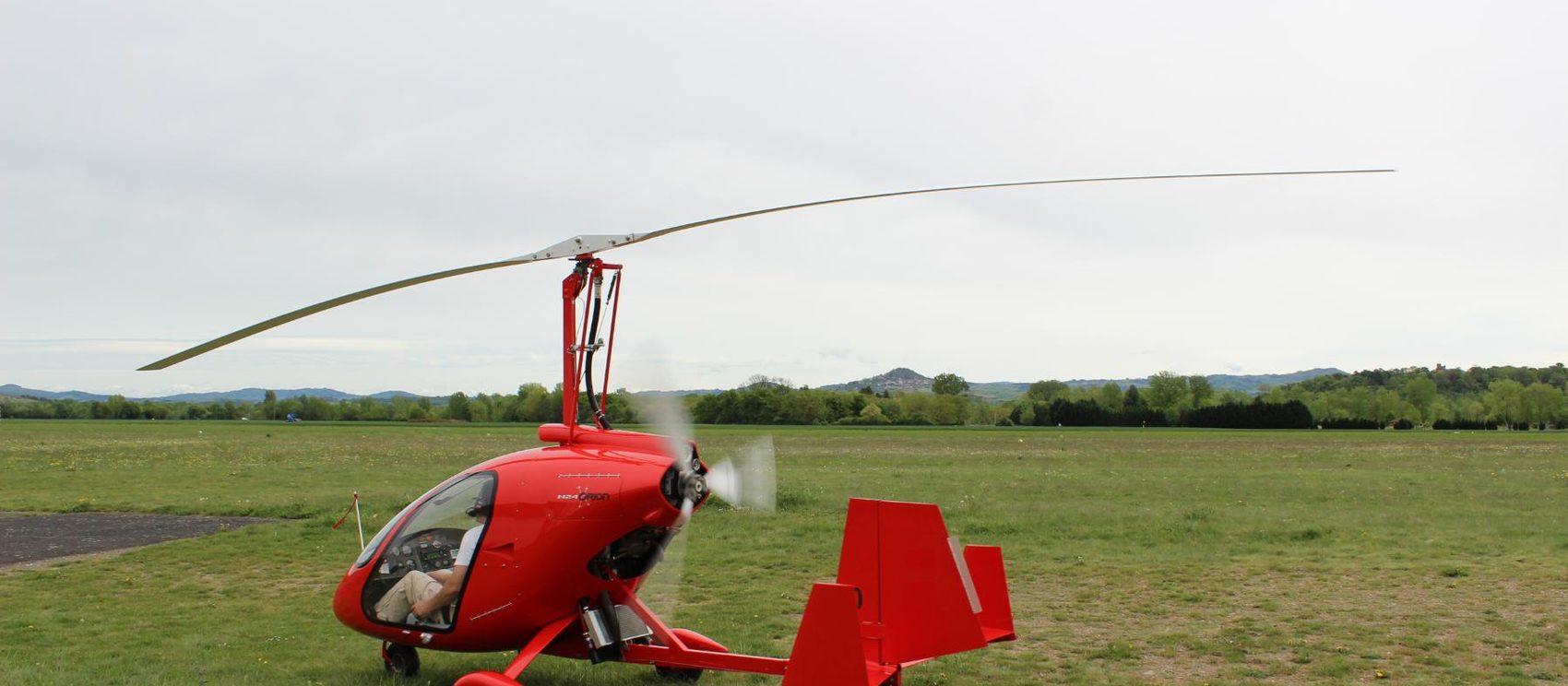
One of the gyrocopter's most underrated features has nothing to do with flying: it fits places aircraft do not. With the rotor blades off or folded, a machine that flies two people stores in a single garage bay and rides on an ordinary trailer behind an ordinary truck. That changes the money and the logistics of ownership more than most buyers realise, so here is how storage and transport actually work.
The short version
- Rotor blades come off or fold in minutes on most machines, shrinking the footprint to car size.
- Many owners trailer to the airfield and skip hangar rent entirely.
- A hangar is still the gold standard for a machine that lives assembled.
- The rotor blades are the precious cargo: they ride padded, supported and never twisted.
The footprint, with and without blades
Assembled, a two-seat gyroplane stands roughly as long as a large car with a rotor spanning eight or so meters overhead, which is why it needs a hangar the way any aircraft does. Take the blades off, two bolts and a helper on most factory machines, or fold them aft on models designed for it, and the aircraft becomes a tall motorcycle-trike shape that rolls into a domestic garage. That single trick is the difference between paying airport rent forever and keeping your aircraft at home, and it is a genuine line item: hangar space at busy fields runs from a modest sum to painful, every single month, before the aircraft flies a minute.
The trailer life
A meaningful share of gyro owners never rent a hangar at all. The aircraft lives at home, rides a flatbed or purpose-built trailer to the field, and is rigged in half an hour. The machine's short, dense shape suits trailering far better than any airplane with wings to detach: no wide load, no special permits, an ordinary tow vehicle. Owners who fly from multiple sites, or who chase good weather across a region, treat the trailer as part of the aircraft. The cost of a decent trailer is real but one-time, and it usually pays for itself against hangar rent within a couple of years.
The blades are where trailering goes wrong. Rotor blades are precision airfoils with a bonded structure, and they do not tolerate being flexed, twisted, point-loaded or bounced on a rack. They travel in padded cradles, supported along their length, fixed against chafe, and they get inspected before reinstallation every time. A blade that took a careless journey can cost thousands to replace, and the failure mode of flying a damaged one does not bear thinking about. Read the manufacturer's transport instructions and follow them to the letter.
Hangar, garage or outside
| Option | Cost | The catch |
|---|---|---|
| Airport hangar | Monthly rent, field-dependent | Waiting lists at popular fields |
| Home garage + trailer | Trailer once, then fuel | Rig and de-rig time each flight |
| Outside on tie-downs | Cheapest rent | Weather ages the machine fastest |
What storage does to the machine
Where the aircraft sleeps shows up in its logbook. Outside storage bakes canopies, fades composites, corrodes hardware and invites water into places water should not be, and it quietly taxes resale value. A hangared or garaged machine ages at a fraction of the rate. Fuel is the other storage question: ethanol-blend gasoline left sitting pulls in moisture and goes stale, so owners storing between flights keep tanks managed the way the fuel guide describes. A machine that lives indoors with fresh fuel and exercised seals is the one that starts on the first turn in spring.
Buying at a distance, and getting it home
Trailerability also solves the problem every buyer in a thin market faces: the right machine is rarely nearby. A gyroplane bought three states away comes home on a trailer behind your own truck, no ferry pilot, no delivery flight, no weather window. Sellers are used to the drill, and a purchase that includes the blades properly cradled and the paperwork in order is a one-weekend errand. That is simply not true of most aircraft, and it widens your shopping radius to the whole country.
The buyer's angle
Storage is worth deciding before you buy, because it steers the purchase. If the aircraft will live at home, blade removal or folding needs to be genuinely easy on the model you choose, and an open frame trailers more casually than a faired enclosed cabin. If it will live in a hangar, none of that matters and the enclosed tourer gets more attractive. Either way, budget the true cost of where it sleeps into the ownership math in what a gyrocopter costs, because a decade of hangar rent can quietly exceed the price of the aircraft itself.
An aircraft that fits in the garage is an aircraft you fly on a whim. Ask any owner what they actually love about the gyro and the trailer comes up more than you would guess.
Match the machine to where it will live
Blade systems, folding options and footprints vary by model. Compare them before the purchase, not after.
Report inaccurate information. This page mixes public data with our own notes. Tell us what looks off and we will check it.