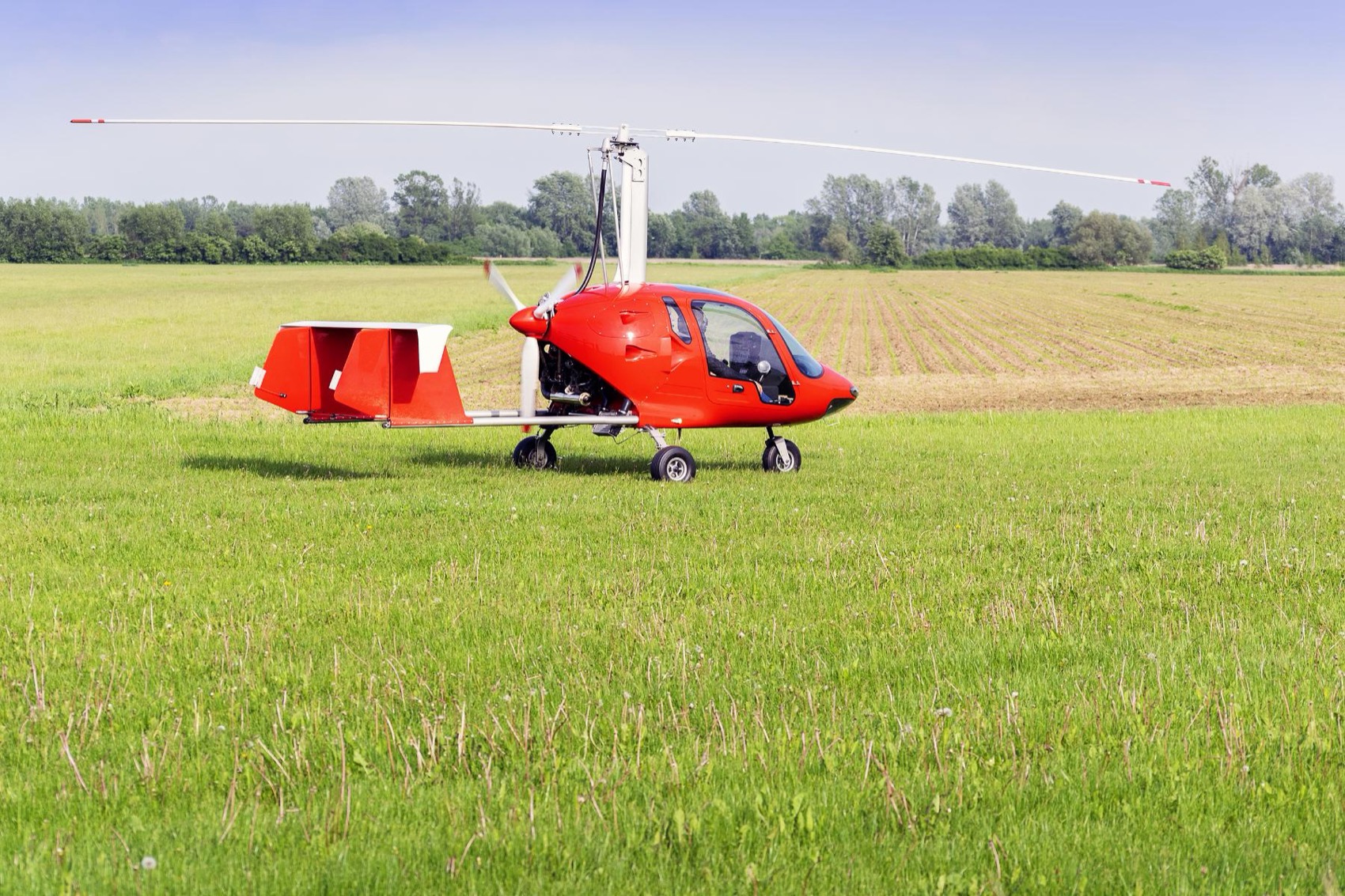
People searching for the safest gyrocopter manufacturer usually want one thing: a name. We are not going to hand you one, and it is worth explaining why. No publicly reliable, per-manufacturer accident-rate ranking exists for gyroplanes. Fleets are small, aircraft are registered and flown across dozens of countries, and reporting is not standardised the way it is for cars or airliners. Anyone quoting you a confident ranked list with numbers behind it is making the numbers up, and we would rather tell you what actually predicts a safer design than invent a scoreboard.
What we can tell you honestly
- No reliable ranking of manufacturers by accident rate exists in public data.
- Two specific design features predict safety far better than a brand name does.
- Factory certification is a real, checkable safety signal, though not a perfect one.
- Gyrocopters.com is compiling manufacturer-level data as an ongoing project.
The design features that actually matter
The gyrocopter's old, dangerous reputation traces to a specific and well understood layout: a propeller thrust line set high above the aircraft's centre of gravity, paired with little or no horizontal stabiliser. Unload the rotor in that configuration and the propeller can pitch the nose down in a way the pilot cannot reverse. Bring the thrust line down close to the centre of gravity and add a proper stabiliser, and that failure mode is largely engineered out. We cover the physics and the accident history in full in are gyrocopters safe. The practical version here is simple: when you are evaluating any manufacturer, check where the thrust line sits and whether the tail carries a real stabiliser. That single check tells you more than the brand's marketing does.
Certification is a real signal, not the whole answer
A factory-certified aircraft has been through an actual design review by a civil aviation authority in its home country. AutoGyro and Magni Gyro, the two largest factory manufacturers, both hold that status in Europe. An experimental or kit-built aircraft has not been through that external review, which puts more of the burden on the builder and the buyer to evaluate the design themselves. The FAA's MOSAIC rule is opening a first factory light-sport certification path in the United States, which we cover in the MOSAIC rule and gyroplane flight training. Certification is a useful proxy, not a guarantee. It confirms someone independent checked the engineering. It does not confirm how well any individual aircraft was maintained or flown.
Certification status and thrust-line geometry are checkable facts. An accident-rate claim attached to a specific manufacturer, without a cited source and a real sample size behind it, is not. Ask for the source before you believe the number.
How to actually look at an aircraft
You do not need an engineering degree to run this check, only a clear side view of the machine. Look at where the propeller sits relative to the main wheels and the pilot's seat. On a modern, well laid out design, the propeller hub sits close to the same height as the centre of gravity, and the tail carries a stabiliser sized to match, a visible horizontal surface, not an afterthought bolted on. On the old high-risk layout the propeller sits well above that line, with little or nothing behind it to resist a pitch down. A manufacturer's own photographs and three-view drawings, published on their own site or ours, are usually enough to see the difference for yourself instead of taking anyone's word for it, ours included.
A practical checklist instead of a ranking
Run any manufacturer you are considering through the same short list.
| Check | Why it matters |
|---|---|
| Thrust line and stabiliser | The two features that tamed the old failure mode |
| Certification status | An independent design review happened, or it did not |
| Years in production, fleet size | A long-flown design with no notorious pattern is itself informative |
| Type-specific instruction available | A design you cannot get proper training on is a training risk, whatever the airframe |
| Parts and support network | An unsupported aircraft becomes a maintenance risk over time |
That last point is easy to skip and expensive to ignore. Confirm you can find a gyroplane instructor who actually teaches the model you are looking at before you buy it, not after.
What we are actually doing about it
This is a real gap, and we think it is worth closing properly instead of filling it with a guess. Gyrocopters.com is compiling manufacturer-level data, design lineage, certification status by country, and where US instruction is actually available, as an ongoing project. When that picture is solid enough to publish honestly, we will. Until then, the manufacturer directory and the checklist above are the honest tools we can put in your hands today.
Compare what is actually published
See every manufacturer's real specifications side by side, or answer a few questions and let the finder shortlist the models that fit you.
Report inaccurate information. This page mixes public data with our own notes. Tell us what looks off and we will check it.