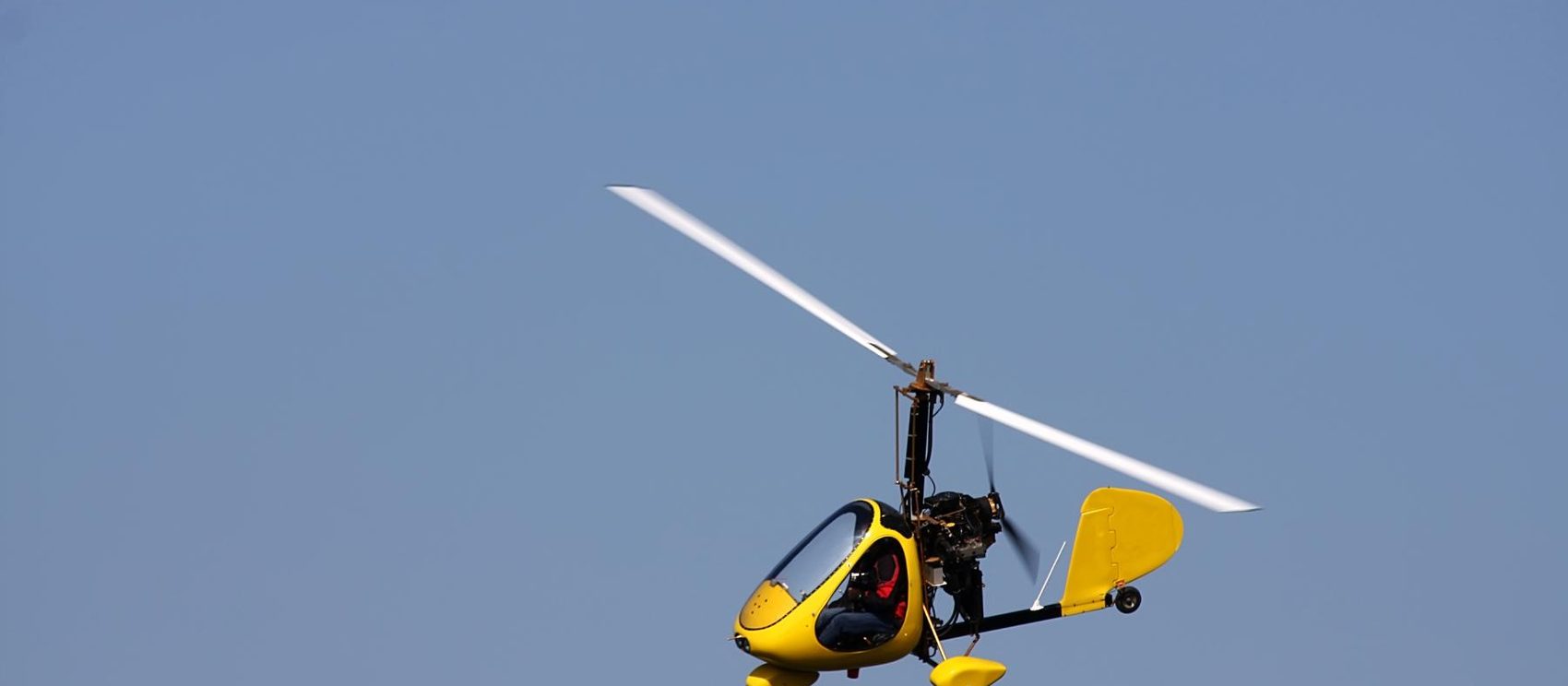
A gyrocopter handles wind better than almost any other light aircraft, and rain worse than most, and both facts come from the same open, low-and-slow design. If you are weighing one up as a machine you can actually use on ordinary days, the weather question is a fair one, and the honest answer is more encouraging on wind than on rain.
The short version
- Wind and gusts that unsettle light airplanes are where a gyrocopter is genuinely at home.
- It cannot stall, so the classic low-speed, gusty-day loss of control is off the table.
- Rain is the weakness: an open cockpit is unpleasant in it, and heavy rain hurts visibility.
- Thunderstorms, icing and low cloud are a no for a gyroplane, exactly as for any light aircraft.
Why wind is a gyrocopter's friend
This surprises people who assume a light rotorcraft must be delicate. It is the opposite. Because a gyroplane flies slowly and cannot stall, a gusty day that would have a fixed-wing pilot fighting for control is often just a lively, manageable flight in a gyro. The rotor keeps flying no matter how the air throws the machine around, and the aircraft's low speed means a strong headwind shortens its takeoff and landing instead of threatening them. Plenty of gyro pilots fly happily in conditions that keep the local flying club's airplanes in the hangar.
Where the wind limit actually is
Friend is not the same as no limit. Every gyroplane has crosswind and gust figures in its flight manual, and a strong, badly angled crosswind on the ground, during the takeoff roll or the rollout, is where the risk lives, not in the air. The tall rotor mast sits high above the wheels, so ground handling in a real blow demands respect and technique. The sky is where a gyro shrugs off wind. The ground is where a careless pilot lets the wind bite.
Turbulence is a comfort question in a gyroplane more than a safety one. The aircraft rides rough air well and will not stall out of it, but a bumpy flight in an open machine is still a physical, tiring experience, and it is worth flying an hour in real conditions before you decide how much of it you enjoy. What you will not get is the knife-edge, close-to-stall nervousness that makes a gusty day frightening in a small airplane.
Rain is the real weakness
Here the design works against you. Most gyroplanes, and nearly all the affordable ones, put you in the open or behind a small windscreen, so flying in rain ranges from unpleasant to genuinely difficult. Raindrops at flying speed sting, an open cockpit offers little shelter, and heavy rain cuts the visibility you rely on for low flying. An enclosed, side-by-side machine like a Cavalon fares far better and is the choice for anyone who wants to fly in marginal weather, but even then a gyroplane is a visual-flying aircraft, and rain that closes the view down is a reason to be on the ground.
| Condition | Verdict |
|---|---|
| Strong, steady wind | A strength; shortens takeoff and landing |
| Gusts and turbulence | Handled well in the air; watch ground handling |
| Light rain | Flyable but unpleasant in an open machine |
| Heavy rain, low cloud | No; visibility and comfort both fail |
| Thunderstorms, icing | A firm no, as for any light aircraft |
The conditions that are simply a no
Some weather is off-limits for a gyroplane exactly as it is for any small aircraft, and no amount of the machine's toughness changes it. Thunderstorms and their violent air, icing conditions, and cloud low enough to trap a visual-only aircraft are all firm stops. A gyroplane is a fair-weather flyer with an unusually high tolerance for wind, and knowing which end of that sentence applies today is part of the judgement every pilot has to build.
A gyrocopter is the aircraft that still flies on the windy days and stays home on the wet ones. Learn which is which and it rarely lets you down.
What this means for a buyer
If you live somewhere windy and want an aircraft that will still fly on a blowy afternoon, a gyrocopter is one of the best answers there is. If you need to fly reliably through wet seasons, buy the enclosed cabin and accept that even then the weather calls the shots. Match the machine to your climate honestly, using the open-versus-enclosed guidance in the buyer's guide, and the weather becomes a planning question, not a disappointment.
Pick the cabin your weather calls for
Open or enclosed changes everything about flying in marginal conditions. Compare what each manufacturer offers.
Report inaccurate information. This page mixes public data with our own notes. Tell us what looks off and we will check it.