If you are searching this, you are probably comparing flight schools and hour estimates already. Here is what the certificate actually involves, and then the thing a lot of people researching it never come across: a second, very different way to fly that a surprising number of fixed-wing students end up adding on top of it, not swapping it out for.
The short version
- A private pilot certificate opens up fixed-wing aircraft generally, not one type.
- Almost nobody finishes at the regulatory minimum, so the minimum is a floor, not a budget.
- A gyroplane is a different rotorcraft with its own certificate, and an existing airplane pilot can add it in a handful of hours.
- It is not a replacement for the airplane's speed and range. It is a genuinely different kind of flying.
How to get a private pilot license
-
Take a discovery flight first
An hour with an instructor tells you whether you actually want this before you have spent anything meaningful. Do this before you buy a headset, a logbook, or a training package.
-
Get the medical sorted early
Class of medical depends on what you intend to do with the certificate, and it is the one step that can stop everything. Find out where you stand before you commit to a school.
-
Choose a school and ask the honest question
Not what the minimum hours are. Ask what their students actually average, and what the all-in figure has been for the last few people who finished. Any school worth training with will tell you without being pushed.
-
Ground school alongside, not after
The written material does not need aircraft time. Studying it in parallel keeps expensive hours for handling instead of things you could have learned at a kitchen table.
-
Fly consistently
This is where the money goes. Long gaps mean re-learning, and re-learning is billed at the same rate as learning. Two lessons a week finishes for less than one lesson a fortnight, even though the hourly rate is identical.
Hour minimums are set by regulation and depend on which certificate you are after. Your national authority publishes them and they change, so we are not reprinting numbers here that might be a revision out of date by the time you read this. What does not change is that the minimum is a floor almost nobody lands on.
The part most people searching this never find out
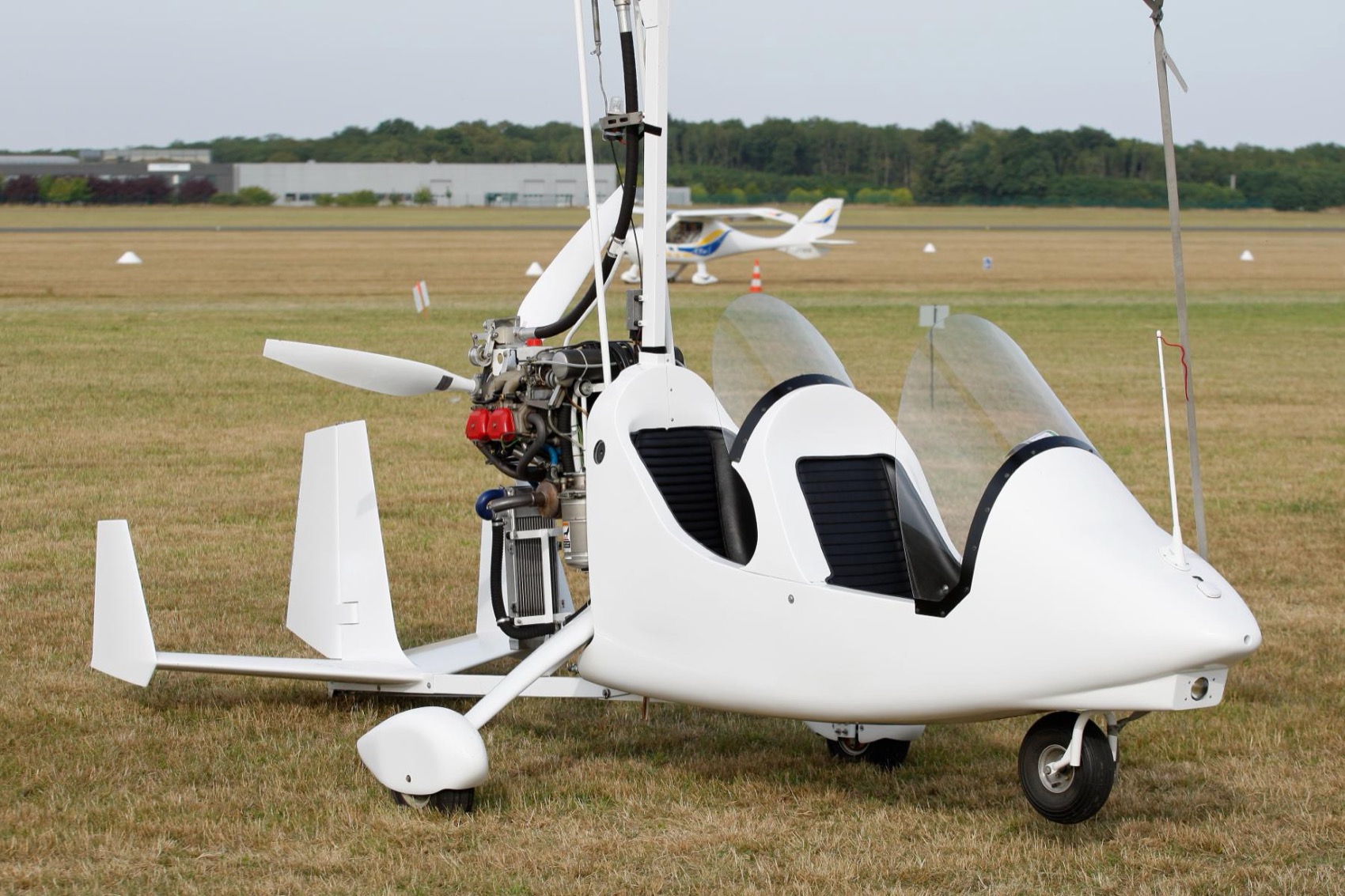
A gyroplane is not a fixed-wing aircraft, and this is not a pitch to switch. It is a genuinely different rotorcraft, and a real number of fixed-wing students discover it partway through their own training and add it on top instead of trading anything in. The mechanism is different from anything an airplane does: the rotor is turned by air passing up through it, not by the engine, so it is already generating lift the same way at every speed the aircraft flies, with no stall and no spin to train against. We explain the physics in what is autorotation.
What actually differs is the mission, not which one is objectively better. An airplane covers distance efficiently and is a tool built for getting somewhere. A gyroplane uses a couple hundred feet of runway, tolerates gusty air that keeps light airplanes in the hangar, and gives an open, low-and-slow view of the ground that no airplane cabin approaches. If your flying has a destination, the airplane is doing its job. If the flight itself is the point, the gyroplane is a different instrument entirely, not a cheaper version of the same one.
| Fixed-wing airplane | Gyroplane | |
|---|---|---|
| Cruise speed | Commonly 115 to 160 mph | 60 to 100 mph |
| Stall or spin | Can; trained against constantly | Cannot |
| Gusty wind | Uncomfortable to unsafe | At home in it |
| Field length | Usually far more | A couple hundred feet |
| Range with load | 400 to 700 miles and up | 200 to 350 miles |
| Built for | Getting somewhere | The flying itself |
Adding it is faster than starting it
This is the part worth knowing before you assume a second certificate means starting over. An existing fixed-wing pilot can typically add a gyroplane rating in a handful of hours, not the full course a first-time student needs. Your existing airmanship, radio work and decision-making transfer. The handling does not, and this is not a small print warning, it is the paragraph to read twice.
A gyroplane demands a specific discipline an airplane does not: keeping the rotor loaded. Unload it, particularly with power applied, and you can enter a power push over. It appears repeatedly in accident reports, it is unforgiving, and airplane hours do not prepare you for it. Type-specific instruction is not optional, however experienced you already are.
Costs land closer than most people expect between the two, and neither is simply the budget option. The fuller comparison, speed, safety, running costs and the licence path in both directions, is in gyrocopter vs airplane.
Fly an hour before you decide anything
Schools that teach gyroplanes will fly you before you commit to anything. That hour answers more than a spec sheet ever will.
Report inaccurate information. This page mixes public data with our own notes. Tell us what looks off and we will check it.