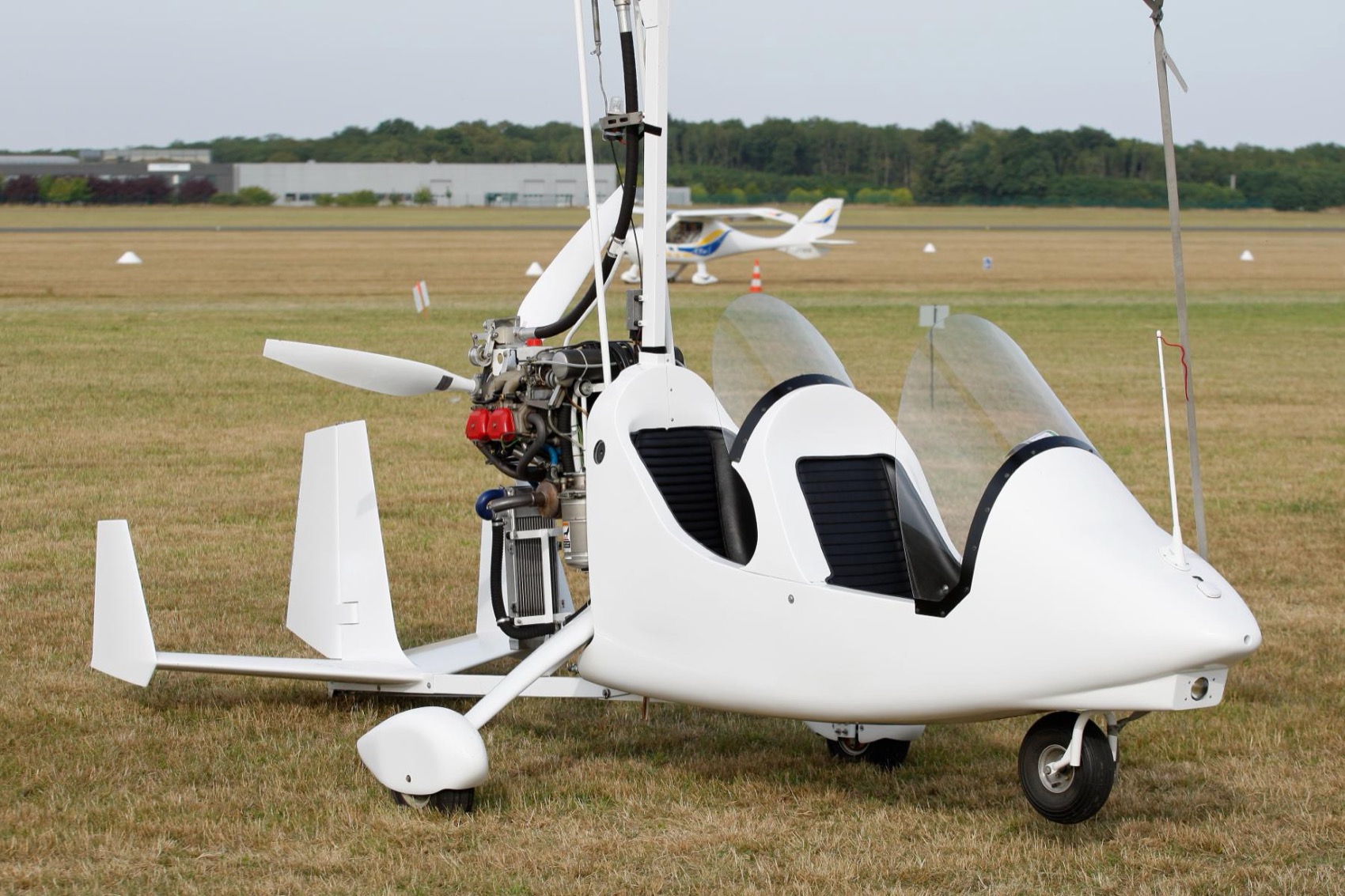
A modern two-seat gyrocopter can typically carry somewhere in the region of 480 to 680 pounds of people, fuel and baggage, and the exact figure varies a lot by model. That number, the useful load, is one of the first things to check when you are sizing up an aircraft, because it decides whether you can fly two adults with full fuel or whether something has to give.
Every figure here is a typical example. Your aircraft's own weight-and-balance paperwork is the authority, and it is the document to plan against.
The short version
- Useful load on a two-seater is commonly around 480 to 680 pounds, model depending.
- That figure has to cover both occupants, all the fuel, and any baggage at once.
- Most machines also list a maximum pilot weight, often somewhere around 240 to 280 pounds.
- Where the weight sits matters as much as how much there is; balance is not optional.
What useful load actually means
Useful load is simply the aircraft's maximum takeoff weight minus its empty weight, and it is the total you are allowed to add. For a sense of scale, an AutoGyro Cavalon has been quoted with a useful load around 484 pounds and a maximum takeoff weight near 1,235 pounds, while an open MTOsport carries more, in the region of 560 to 580 pounds, and some machines such as a Magni scout are higher still. The point is not the specific numbers, it is that they are finite, and everything you put in the aircraft draws on the same account.
| Machine | Rough useful load | Note |
|---|---|---|
| Enclosed side-by-side | Around 480 to 500 lb | Cabin and equipment eat into it |
| Open tandem | Around 560 to 680 lb | Lighter airframe, more to spare |
| Max pilot weight | Often 240 to 280 lb | A separate, per-seat limit |
The trade you make on every flight
Here is where useful load stops being a spec and starts being a decision. Two adults, full fuel and a bag for each can add up past what a smaller machine allows, so you trade. Carry less fuel and accept a shorter flight, leave the baggage behind, or fly solo with everything topped up. None of this is unique to gyroplanes, every light aircraft plays the same game, but a gyro's modest useful load means the sums are real. Work them before you load up, not after you have strapped in.
The per-seat pilot weight limit is the one that quietly disqualifies buyers, so check it early. A larger person may find that a specific model's maximum pilot weight rules it out before any other factor does, while a different machine seats them comfortably and legally. If weight is a consideration for you, ask about the seat and pilot limits on the very first phone call, not after a deposit.
A worked example
Put numbers on it and the trade becomes obvious. Say a machine has a useful load of 500 pounds. Two average adults might account for around 360 of that between them, which leaves roughly 140 pounds for fuel and everything else. Fuel is not weightless: a full tank can easily be 100 pounds or more, so with two aboard and the tank brimmed you are close to the limit before a single bag goes in. Swap one large passenger for a smaller one, or fly with the tank half full for a local hop, and the picture eases at once. This is the quiet arithmetic every gyro owner runs before a loaded flight, and it is why the useful-load figure on the spec sheet is one of the first things worth checking.
Where the weight sits matters too
Total weight is only half the question. A gyroplane has a centre-of-gravity range it must stay inside, and a heavy load in the wrong place is a genuine handling and safety issue, not a paperwork nicety. This is why weight-and-balance is a standard part of preflight planning: it is not about whether the load is under the limit, it is about whether the load, arranged the way you have arranged it, keeps the aircraft inside its safe envelope. An instructor teaches you to run those numbers for your specific machine, and that is where you should learn it, on your type, not from a page.
What this means when you are shopping
Treat useful load and pilot weight as filters, applied early. Decide honestly what you need to carry, two big adults, a weekend's fuel, some luggage, and rule out the machines that cannot do it before you fall for their looks. A gyroplane that is perfect in every way except that it cannot legally lift you and a friend is not a perfect gyroplane. The buyer's guide walks through matching a machine to your real mission in the best gyrocopter to buy.
Compare the weights that actually matter
Empty weight, maximum takeoff weight and useful load, recorded per aircraft as each manufacturer publishes them.
Report inaccurate information. This page mixes public data with our own notes. Tell us what looks off and we will check it.