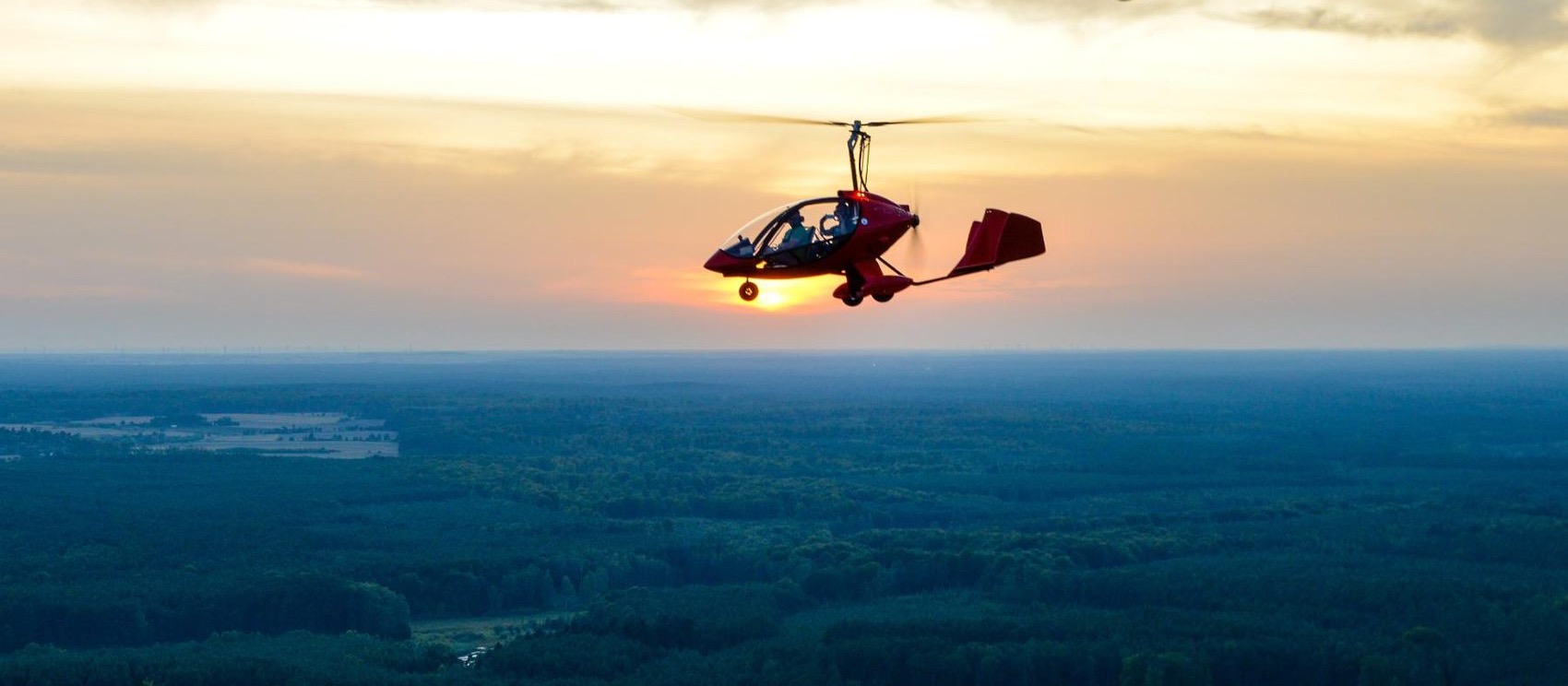
For most of the aircraft's modern life the answer was a flat no for the average owner, because the entry-level certificate people fly gyroplanes on was daytime only. That has just changed. A recent rewrite of the rules opens night flying to more pilots than before, with one important string attached, and it is worth getting the current picture straight because a lot of what is written online is now out of date.
Rules like these are federal and were revised in 2025, so treat this as the shape of it and confirm the specifics with the FAA and an instructor before you plan a night flight.
The short version
- Historically, sport pilots flew gyroplanes by day only; private pilots could fly at night.
- The FAA's MOSAIC rule now lets sport pilots fly at night, with a real medical certificate, not just a driver's licence.
- Night flight legally runs from an hour after sunset to an hour before sunrise.
- The aircraft itself must be equipped and approved for night, which not every gyroplane is.
What just changed, and why it matters
The old split was simple. A sport pilot certificate, the quick and affordable way into gyroplanes, permitted day flying only. To fly at night you needed a private pilot certificate, which meant an FAA medical and extra training. The MOSAIC rule, finalised in 2025, broadened what a sport pilot may do, and night flying is one of the privileges it opened up. For a lot of owners that is a genuine expansion of when they can use their aircraft.
The catch: the medical
Night flying under the new rules is not free of conditions. A general sport pilot can use a valid driver's licence in place of an aviation medical, but the night privilege specifically requires a proper FAA medical certificate, such as a third class or BasicMed. The logic is straightforward: night flying is more demanding on vision and judgement, and the authorities want a medical standard behind it. If you cannot or will not hold that medical, night stays off the table, whatever your certificate says.
| Route | Night flying | Medical needed |
|---|---|---|
| Sport pilot, before MOSAIC | Day only | Driver's licence |
| Sport pilot, under MOSAIC | Allowed with endorsement | FAA medical or BasicMed |
| Private pilot | Allowed with training | FAA medical |
The aircraft has to be ready too
A licence to fly at night is only half of it. The gyroplane itself must be equipped and approved for night operation, which means the required lighting and instruments, and an airworthiness certificate that permits it. Many older or minimal machines simply are not set up for it, and an experimental aircraft can only be flown at night if it carries the equipment the rules demand. So before you count on night flying, confirm that the specific aircraft you own or are buying is legal for it, not just that you are.
Legal and wise are two different questions. Night flying in any light aircraft is less forgiving: a forced landing after an engine failure is far harder to judge when you cannot see the ground you are aiming at. A gyroplane's calm, no-roll power-off landing helps, but it does not undo the fact that you cannot pick a field you cannot see. Night-rated gyro pilots treat it as a serious step up in training and preparation, not a casual extension of a day licence.
What night flying asks of the pilot
Beyond the paperwork, flying after dark is a skill of its own. A private pilot earning the privilege trains specifically for it, including night cross-country work and a set of night takeoffs and landings, and a sport pilot taking on the new privilege should expect real instruction too. You are learning to fly on instruments and outside references you cannot fully trust, to judge height and distance by lights, and to plan for an emergency you cannot see coming as early. None of that is a reason to avoid it. It is a reason to train for it properly.
Should you bother?
For many gyro owners, the aircraft is a fair-weather, daylight pleasure, and night privileges are something they will never use. For others, the ability to catch a sunset flight home or fly on a still evening is exactly the point. If it matters to you, factor the medical and the aircraft equipment into your plans from the start, and get the training. The certificate itself is covered in do you need a license to fly a gyrocopter. Done right, the night rating turns a fair-weather machine into one you can fly on a calm evening long after the airplanes have gone quiet, which for some owners is the best flying of the day.
Ask an instructor what night takes in your area
The rules are current-at-writing and the aircraft requirements vary. An instructor on your type will tell you exactly what applies to you.
Report inaccurate information. This page mixes public data with our own notes. Tell us what looks off and we will check it.