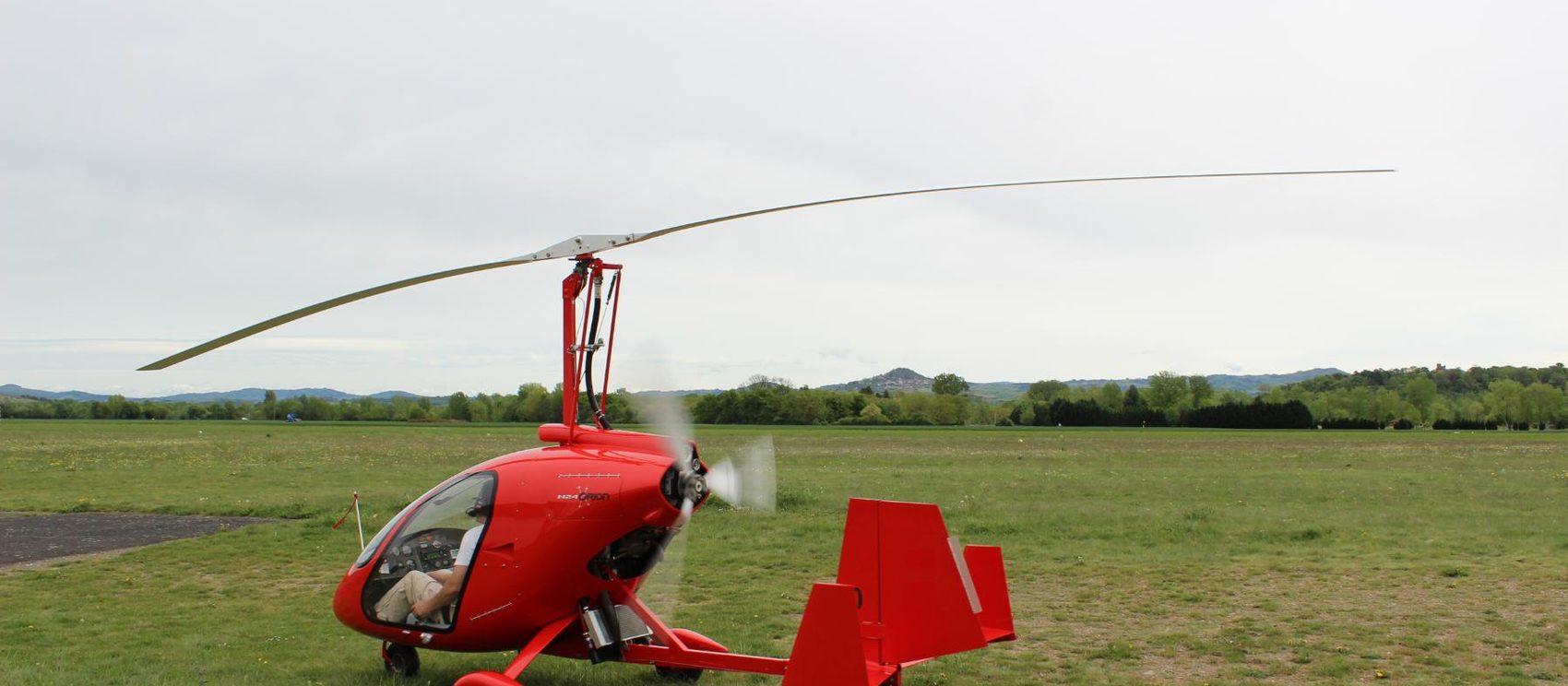
Yes, gyrocopters are legal to fly in the United States, and no, you cannot lift off from your suburban driveway and buzz the neighborhood. Both of those surprise people. A gyroplane is a certificated aircraft flown by a certificated pilot under the same airspace rules as everything else with wings, and once you understand those rules, where you can fly is mostly common sense.
One caveat up front: airspace and operating rules are federal, detailed, and occasionally revised. Treat what follows as the shape of the thing, and confirm the specifics with the FAA and a local instructor before you act on them.
The short version
- Gyrocopters are legal, but they are aircraft, so a certificate and a registered, airworthy machine are required.
- You fly from airports, private airstrips, or private land with the owner's permission, not from public roads.
- Federal minimum-altitude rules keep you well clear of people and buildings.
- Controlled airspace around big airports needs clearance and the right equipment.
Where you can take off and land
The obvious answer is an airport, towered or not, and that is where most flying starts and ends. Beyond that, a gyroplane's short takeoff and near-vertical landing let it operate from places a light airplane cannot: a private grass strip, a friend's farm, a patch of open land. The rule there is ownership and permission. Private property is fair game with the landowner's consent, and plenty of gyro pilots keep their machine on rural land. What you cannot do is treat a public road, a park, or a residential street as a runway.
The rules that govern where you can go
Once airborne, you obey the same airspace as any other aircraft. Two sets of rules matter most to a low-and-slow machine.
| Rule | What it means for you |
|---|---|
| Minimum safe altitudes | Federal rules keep you a set height above people and structures, and high enough to land clear if the engine quits. Low buzzing of houses is illegal. |
| Airspace class | Open airspace away from big airports is freely available. The controlled airspace around major airports needs clearance and equipment you may not carry. |
| Pilot privileges | What your certificate permits, day or night, and which airspace you may enter, is set by your rating and endorsements. |
The one that catches newcomers is the minimum-altitude rule. A gyrocopter feels made for skimming low over the landscape, and over genuinely open, unpopulated country you have real freedom to do exactly that. Over a town, a highway, or a crowd, you do not. The line is federal, it is enforced, and the engine-out logic behind it is sound: stay high enough that you can always glide to somewhere safe.
Can you fly one from your own land?
Often, yes, and this is one of the aircraft's real attractions. If you own or have permission to use suitable rural land, and the airspace above it is open, you can base and fly a gyroplane there. The practical limits are the airspace overhead, the minimum-altitude rules once you climb out, and being a considerate neighbor. In a built-up area none of that works, which is why gyro owners tend to live where the land is open. It is worth checking local zoning too, because that is a separate question from federal aviation law.
Controlled and uncontrolled airspace, briefly
Most recreational gyroplane flying happens in the open airspace that covers the countryside, where you fly without talking to anyone, subject to the altitude rules. It is the busy, controlled airspace wrapped around major airports that has gates on it: to enter it you generally need to be in radio contact, and sometimes to carry equipment a simple open gyroplane may not have. None of this is unique to gyrocopters, it is the same map every pilot flies. A low-and-slow machine is happiest well away from the big-airport airspace anyway, out where the open country and the low altitude are the whole point of owning one.
A gyrocopter is legal almost everywhere a light aircraft is, and off-limits exactly where common sense says it should be: low over people who never asked to be underneath it.
What you need before any of this applies
All of the above assumes two things are already in place: a pilot certificate with a rotorcraft-gyroplane rating, covered in do you need a license, and an aircraft that is registered and holds a current airworthiness certificate. Fly an unregistered or un-airworthy machine, or fly without the rating, and where you are flying stops being the problem.
Find where people actually fly near you
Schools and clubs know the local fields, strips and airspace better than any map. Our directory lists who teaches and flies gyroplanes in your area.
Report inaccurate information. This page mixes public data with our own notes. Tell us what looks off and we will check it.