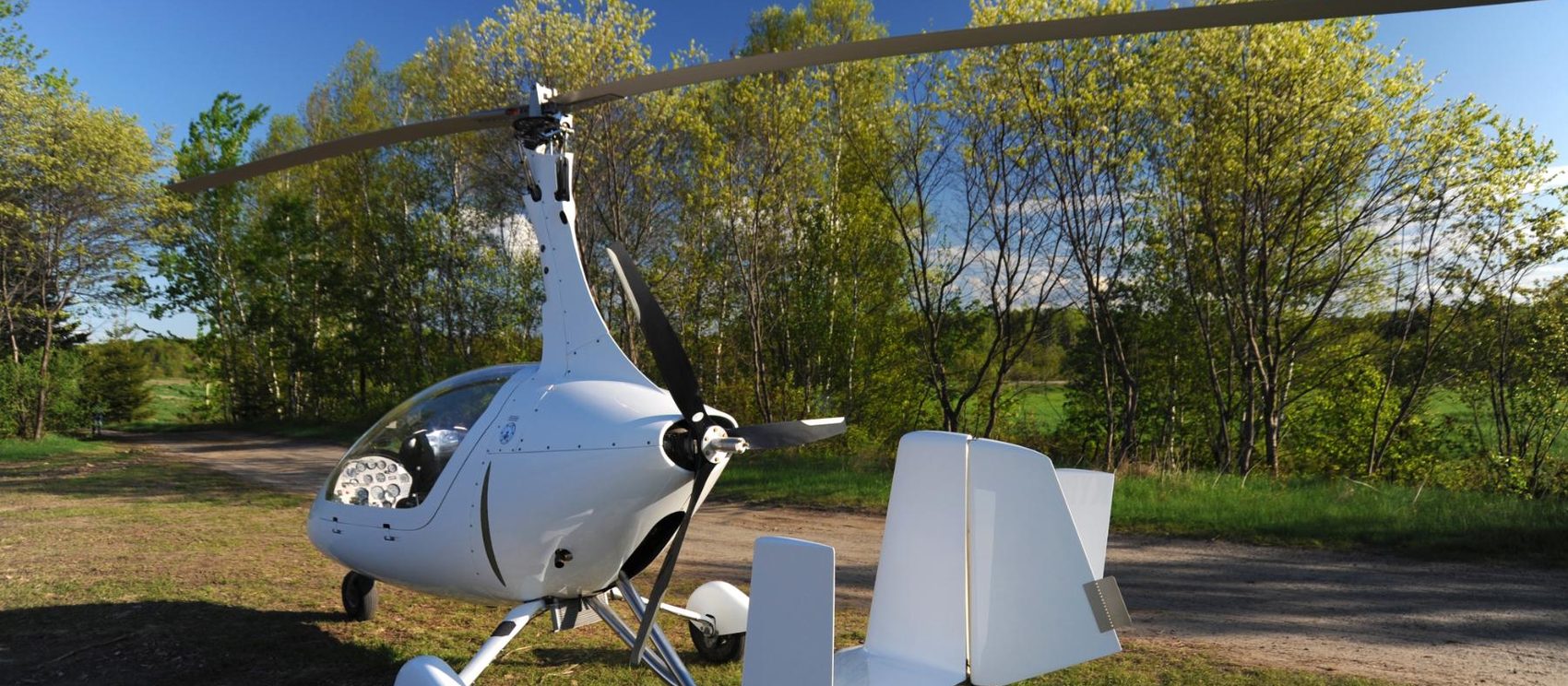
A gyroplane practical test assesses both knowledge and flying skills. Expect substantial ground discussion as well as questions during the flight. The FAA describes knowledge and skill assessment as an ongoing process throughout the practical test; that does not mean there is no oral questioning or ground portion to prepare for. Use the current standards for the certificate and category you are seeking.
The short version
- The sport pilot gyroplane practical test (FAA-S-8081-29, Section 2) runs ten Areas of Operation, ground knowledge through postflight.
- Prepare to explain the applicable tasks as well as perform them. Knowledge assessment can continue throughout the test; the evaluator determines the sequence.
- Specific areas are where a fixed-wing or helicopter background actively works against a transition pilot, not because of weak flying, but because of habits carried over from a different aircraft.
- This same structure underpins the sport pilot add-on proficiency check, even though that path has no examiner.
The ten areas, in order
This is the actual structure from the FAA's sport pilot practical test standards for gyroplane, not a paraphrase. Confirm the current version with your instructor before you rely on it; test standards are revised over time.
| # | Area of Operation | What it covers |
|---|---|---|
| I | Preflight Preparation | Documents, airworthiness, weather, cross-country planning, airspace, systems, aeromedical factors, performance, principles of flight |
| II | Preflight Procedures | Inspection, cockpit management, engine starting, taxiing, before-takeoff check |
| III | Airport Operations | Radio communications, traffic patterns, runway markings and lighting |
| IV | Takeoffs, Landings, and Go-Arounds | Normal, crosswind and soft-field takeoffs and landings, go-arounds |
| V | Performance Maneuver | Steep turns |
| VI | Ground Reference Maneuvers | Rectangular course, S-turns, turns around a point |
| VII | Navigation | Pilotage and dead reckoning, diversion, lost procedures |
| VIII | Flight at Slow Airspeeds | Slow-airspeed handling, high rates of descent and recovery |
| IX | Emergency Operations | Emergency approach and landing, power-off accuracy landing, systems and equipment malfunctions |
| X | Postflight Procedures | After landing, parking, securing |
Why "oral" and "flying" is the wrong way to split it
Each task inside an Area of Operation lists its own objective, and an examiner works through the knowledge elements and the flying elements of that same task together before moving to the next one. Being able to fly a soft-field landing well does not offset being unable to explain why the technique works, because the standard grades both halves of the same task. Preparing means being able to talk through every task on the list, not just fly it.
Where a transition pilot's old habits actually cost points
Two areas on this list are where a fixed-wing or helicopter background most commonly works against a candidate, and it is worth naming them before you get there, not during the test.
Area IX, Emergency Operations, assumes an examinee understands that autorotation is the aircraft's normal flight mode, not a separate emergency skill to switch into. A fixed-wing candidate explaining an engine failure in fixed-wing terms, or a helicopter candidate describing a transition into autorotation, is describing the wrong aircraft. Area VIII, Flight at Slow Airspeeds, and the "before takeoff check" inside Area II both hinge on rotor RPM management, a concept a fixed-wing background has no equivalent for at all and a helicopter background manages differently, since a helicopter's rotor is driven and a gyroplane's is not.
Neither of these is a flying-skill gap. They are places where correct knowledge from a different aircraft is actively wrong knowledge here, and the fix is deliberately unlearning the old explanation, not just practising the maneuver more.
How to actually study against this list
Work the table top to bottom instead of jumping straight to the maneuvers that feel hardest. For every area, write out in your own words why the technique works, not just how to perform it, since that is the half of each task an examiner is checking alongside the flying. Area I alone covers nine separate subjects on its own, weather, airspace, systems, aeromedical factors and more, and it is the area most candidates under-prepare for because none of it involves the stick.
The same structure, without an examiner
If you already hold sport pilot privileges and are adding gyroplane under 14 CFR 61.309 and 61.311 instead of sitting a first practical test, this same set of knowledge and proficiency areas is what your two instructors are training and checking you against. There is no designated pilot examiner in that path, but the standard being met is the same one. We cover exactly which path applies to you in the sport pilot path versus the rotorcraft class rating path.
Go through it area by area with an instructor
A CFI who teaches gyroplanes can walk every one of these ten areas with you before you ever sit in front of an examiner.
Clarification · September 7, 2026: The earlier introduction could suggest that applicants need not prepare for an oral portion. Prepare for both ground discussion and flight assessment. Confirm the applicable edition in the FAA Practical Test Standards directory. A gyroplane instructor should review your specific preparation plan; the remainder of this guide awaits technical review.
Report inaccurate information. This page mixes public data with our own notes. Tell us what looks off and we will check it.